When to Choose Embroidery for Custom Shirts and Polos
 Posted By Custom Ink Staff —
The Custom Ink Staff is a team of design enthusiasts and promo product experts dedicated to bringing your ideas to life. From screen printing secrets to the latest trends in custom gear, we draw on decades of collective experience to help you create something unforgettable.
SHARE:


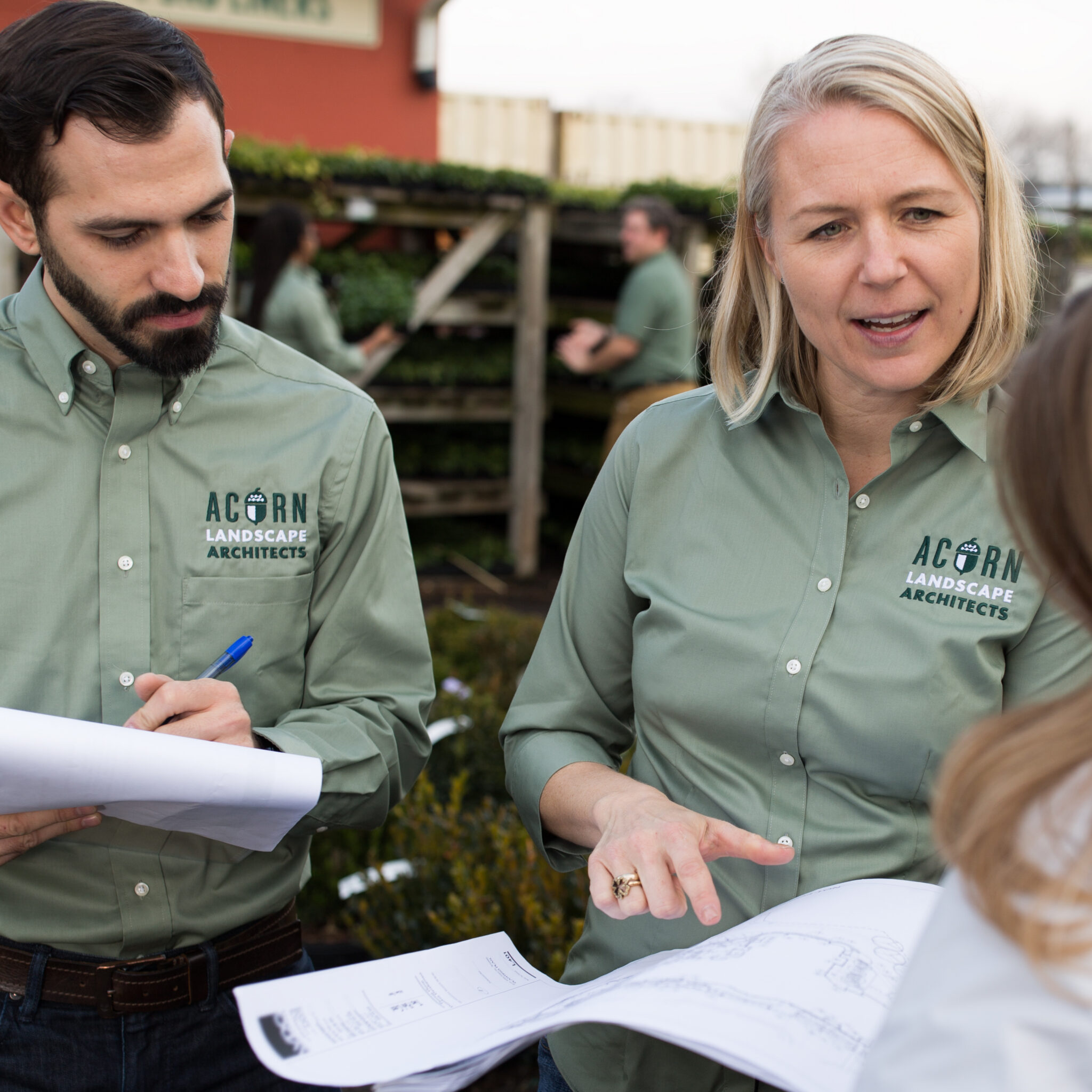
The decoration method on a shirt matters more than most people realize before their first order. Embroidery stitches your design directly into the fabric. Screen printing lays ink on top of it. That physical difference is why an embroidered logo on a polo shirt looks just as sharp after two years of regular wear as it did on day one — and why a printed logo on the same shirt may start cracking or fading long before the garment itself wears out. For anything your team, staff, or group will wear repeatedly, that gap in durability is the whole ballgame.
For a complete overview of the custom t-shirt process—including all decoration methods, fabric options, and ordering—see our custom t-shirts guide.
It’s why service businesses uniform their field crews in embroidered work shirts, why school administrators order embroidered staff polos they can wear to every district event, why nonprofits running annual golf tournaments come back to custom embroidered apparel year after year, and why HR teams reach for embroidered quarter-zips when they want a new-hire welcome kit that actually gets worn.
For businesses deciding between embroidery and screen printing for their branded apparel program, our guide to custom business t-shirts covers how to match decoration method to use case.
The question isn’t “embroidery vs. printing” as a general rule — it’s whether your specific garment, logo, and use case are a good match for what embroidery does well. This guide walks through exactly that.
In This Article
- How Embroidery Works (and Why It Lasts)
- When Embroidery Is the Right Choice
- Embroidered Polo Shirts vs. Work Shirts vs. Tees
- Embroidery vs. Screen Printing: Which Decoration Fits Your Order
- Design Tips for Embroidery That Looks Its Best
- How to Order Custom Embroidered Shirts
- Frequently Asked Questions
Key Takeaways
- 53% of swag buyers want premium decoration in 2026: According to the Custom Ink 2026 Swag Trends Survey, over half of buyers are “Very” or “Extremely” interested in embroidery, leather patches, or laser engraving for their next order, signaling a clear shift away from basic printed apparel.
- Embroidery outlasts the garment itself: Because thread is stitched into the fabric rather than printed on top, an embroidered logo resists cracking, fading, and peeling through hundreds of washes and years of regular wear, making it the right call for uniforms and anything people wear repeatedly.
- The polo shirt and embroidery are a natural match: Piqué knit fabric holds stitches exceptionally well, and the structured left-chest placement is ideally sized for a 5,000 to 10,000 stitch logo. The combination works across industries, from corporate settings to service trades to charity events.
How Embroidery Works (and Why It Lasts)
Every embroidered shirt starts with a file called a digitized design. A technician or software program converts your logo into a stitch file — a precise set of instructions that tells the machine exactly where to place each thread, what type of stitch to use, how many times to run it, and in which order to handle the colors. That digitizing step is what makes or breaks the final result, and it’s why a complex illustrated logo often has to be simplified before it can be embroidered cleanly.
From there, the garment is secured in a hoop that holds the fabric taut under the needle. Consistent tension during this step prevents the puckering and distortion that give embroidery a bad reputation when it’s done carelessly. Then the machine executes the design, and handles thread color changes automatically. Multi-head machines can embroider multiple garments at the same time, which keeps turnaround times reasonable even on larger orders.
Three stitch types do most of the work in any logo. Satin stitches produce a smooth, shiny surface and are the standard choice for lettering and outlines. Fill stitches (also called tatami stitches) cover large color areas with a brick-like pattern that’s efficient without being heavy. Running stitches are the simplest option, used for fine details, thin lines, and travel paths between design elements. Most logos use all three.
Thread type matters more than most people realize. Polyester thread is the industry standard for workwear and uniforms because it resists bleach and UV fading. Rayon thread has a silkier sheen that reads more elegantly on corporate or retail apparel. Our design team works with both and can advise on what fits your garment and use case.
The reason embroidery lasts so long comes down to a simple physical fact: the thread is part of the fabric. Screen printing sits on top of the surface, and over time that layer of ink stretches, cracks, and peels away. Embroidery has no surface layer to lose. Even if a stitch or two comes loose over many years, the rest of the design holds firm.
Embroidery Stitch Count at a Glance
Stitch count drives cost and production time. As a rough benchmark, one solid square inch of embroidery requires about 2,000 stitches, and each letter at a quarter-inch height accounts for roughly 100 stitches.
| Design Type | Approximate Stitch Count | Typical Placement |
|---|---|---|
| Small name or wordmark | 1,000–3,000 | Left chest, collar |
| Standard logo (left chest) | 3,000–7,500 | Left chest (2.5″–4″ wide) |
| Detailed or larger logo | 7,500–15,000 | Left chest, sleeve, back yoke |
| Full back or jacket design | 20,000–40,000+ | Full back panel |
When Embroidery Is the Right Choice
Embroidery earns its premium reputation in specific situations. It’s not the right method for every order, but for the use cases below, it consistently outperforms every alternative.
- Daily-wear uniforms: Any garment that goes through commercial laundry or daily home washing needs a decoration that won’t fade or crack over time. Embroidery handles industrial wash cycles that would destroy screen-printed or DTG-decorated garments.
- Professional and client-facing settings: Customer-facing staff in financial services, healthcare, real estate, legal, and hospitality send a different message in an embroidered logo versus a printed one. The texture and dimensionality of embroidery reads as intentional and premium, even from across a room.
- Polo shirts, structured hats, and outerwear: Piqué polo fabric and structured panels on caps are built to hold embroidery stitches. Fleece, twill jackets, and oxford cloth button-downs also work well.
- Small-to-medium quantities: Because embroidery pricing is based on stitch count rather than color count, it’s competitive at any order size. A set of 12 embroidered polo shirts can be more economical per piece than a comparable screen-printed run once setup costs are factored in.
- Corporate gifting and recognition programs: Embroidery signals that a gift is worth keeping. According to the Custom Ink 2026 Swag Trends Survey, over 53% of buyers are “Very” or “Extremely” interested in premium decoration methods like embroidery for their next order. The data reflects what experienced swag organizers already know: an embroidered item is far more likely to stay in the closet than wind up in the donation pile.
- Logos with limited colors and clean lines: Simple wordmarks, icons, geometric shapes, and text-based logos translate beautifully to thread. Bold, readable designs at a left-chest size between 2.5″ and 4″ wide are the sweet spot.
Embroidery is generally not the right choice for highly detailed illustrations, photorealistic images, gradient or ombre color effects, designs with thin hairlines below 0.05 inches, very small text under a quarter inch tall, or any design that needs to cover a large flat area economically. For those situations, screen printing or digital printing are better options — and for large-format printed designs on custom t-shirts, screen printing scales more cost-effectively.
Customer Story: Annual Manager Camp
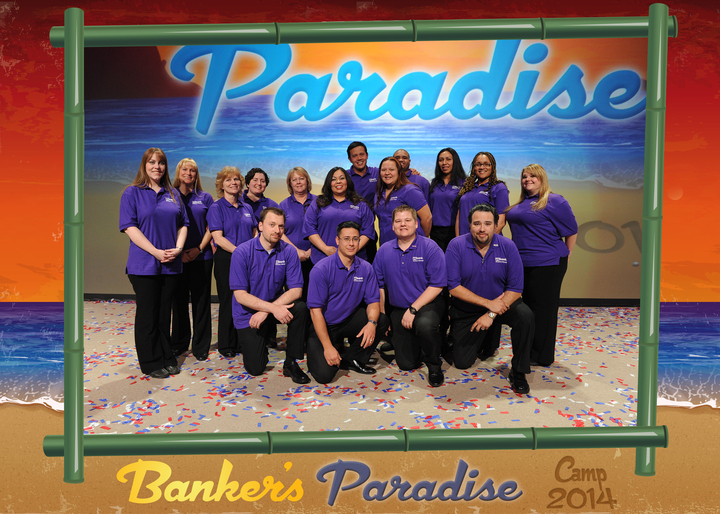
“Every year, our company hosts an event called ‘Camp’ where our managers attend this 3 day conference and spend the whole time in training sessions to become better leaders for our company. Each year, we take a group photo and each year, we rely on CustomInk for our matching shirts!”
— Katie | View full story
Featured Products from This Story

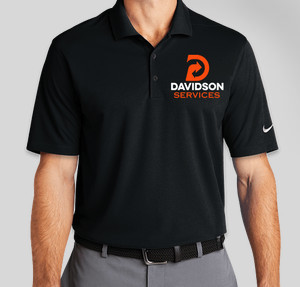
Port Authority Silk Touch Polo — Classic Business Polo
- 5 oz., 65% polyester / 35% ringspun cotton piqué with Silk Touch™ finish; superior wrinkle and shrink resistance
- 32 colors; adult XS–6XL plus Tall LT–4XLT and Youth XS–XL sizing

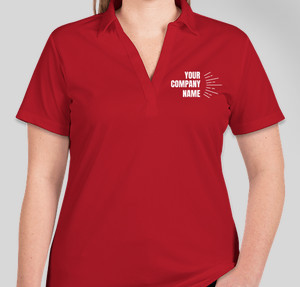
Port Authority Women’s Silk Touch Polo — Matching Women’s Cut
- 5 oz., 65% polyester / 35% cotton piqué; designed to complement the men’s K500 in matching colorways
- 3-button placket, flat knit collar, double-needle armhole seams; women’s XS–6XL
Design Inspiration
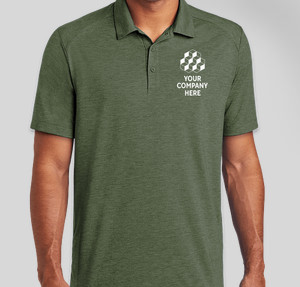
Embroidered Polo Shirts vs. Work Shirts vs. Tees: Which Shirt Type to Choose
The garment you choose for embroidery matters as much as the decoration itself.
Piqué polo fabric is purpose-built for embroidery. Its waffle-like texture grips thread stitches well, provides a stable surface under the needle, and maintains its structure wash after wash. Most of the embroidered uniforms you see on service technicians, restaurant staff, golf courses, and corporate teams use polo fabric for this exact reason.
Work shirts in twill and oxford cloth behave similarly, with enough structure to support detailed embroidery without distortion.
Tees require more care: the lightweight knit of a standard t-shirt can pucker under the needle, so a stabilizer backing is essential, and the logo typically needs to be kept smaller and simpler.
| Garment Type | Best Embroidery Size | Fabric Notes | Best For |
|---|---|---|---|
| Polo shirts (piqué knit) | Left chest, 2.5″–4″ wide | 65/35 poly-cotton or 100% polyester; holds stitches exceptionally well | Uniforms, corporate teams, events, golf, healthcare |
| Work shirts (twill/oxford) | Left chest or sleeve, up to 5.5″ | Medium-weight woven; excellent stitch stability; wrinkle-resistant versions available | Trades, construction, industrial, professional services |
| Embroidered tees (jersey knit) | Left chest only, keep under 3″ wide | Needs stabilizer backing; heavier-weight tees (6+ oz.) perform best | Casual branding, hospitality, clubs, retail staff |
| Fleece / sweatshirts | Left chest or center chest, up to 4″ | Three-layer knit requires careful digitizing so stitches don’t sink into pile | Outerwear layering, fall/winter uniforms, premium swag |
| Structured hats / caps | Front panel, 4″–5.5″ wide | Structured panel provides rigid surface; handles sun, sweat, and outdoor use | Events, outdoor teams, retail branding, tradeshow giveaways |
A common pattern we see: businesses order embroidered polos for their client-facing team, embroidered work shirts for field crews, and embroidered hats for everyone. The decoration method stays consistent, which ties the brand together even across different garment styles. If you’re unsure which direction to go, our design experts are available to review your logo and recommend the right garment and placement combination.
Customer Story: Fight Like Mike — Charity Golf Tournament

“Our Golf Team Photo next to the sponsorship sign of my son, 2x Leukemia (AML & APML) Michael. Golf outing was the JDCforLLS to raise money for the Leukemia Lymphoma Society. Also in remembrance of my Brother-in-Law, who past away in August of 2017 from AML.”
— Team Fight Like Mike | View full story
Featured Products from This Story
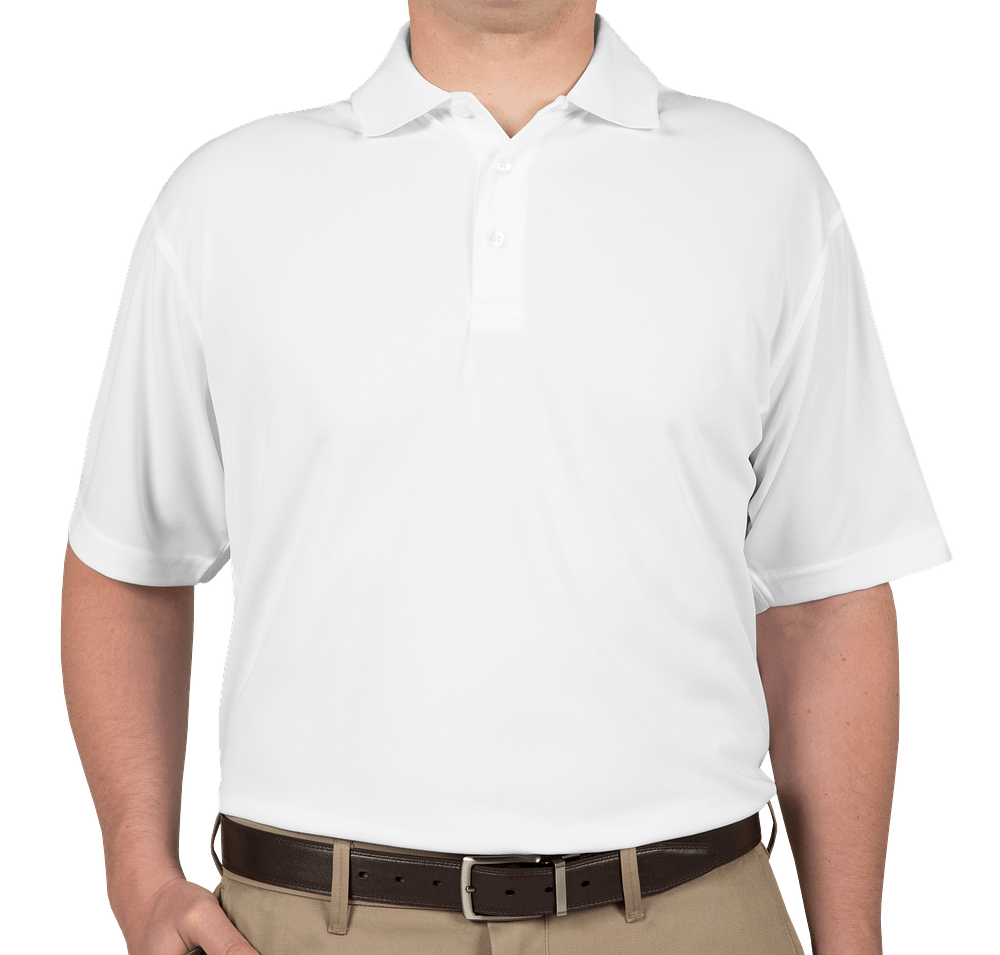
UltraClub Mesh Piqué Performance Polo — Active Performance
- 4.4 oz., 100% polyester mesh piqué with Cool & Dry moisture-wicking technology; pill-resistant, UV-protective
- Fully taped flat rib-knit collar; double-needle flat-lock stitching; S–3XL standard plus tall sizes
Design Inspiration
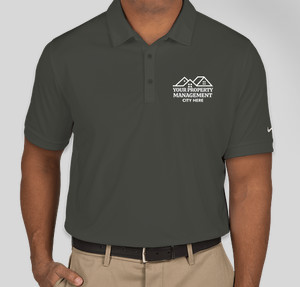
Embroidery vs. Screen Printing: Which Decoration Fits Your Order
Both methods produce great results in the right situations. The decision usually comes down to four things: garment type, design complexity, order quantity, and how long the item will be in service. Here’s how they compare directly.
| Factor | Embroidery | Screen Printing |
|---|---|---|
| Best garments | Polo shirts, hats, jackets, vests, dress shirts, fleece | T-shirts, hoodies, tank tops, large flat fabric areas |
| Design complexity | Simple logos, text, clean shapes (limited detail) | Detailed artwork, unlimited colors, gradients, photorealistic images |
| Durability | Lasts the lifetime of the garment; resists cracking and fading | Years with careful washing; prone to cracking and peeling over time |
| Price driver | Stitch count (more stitches = higher cost) | Color count + quantity (more colors per screen = higher setup) |
| Best value order size | Any quantity (1–500+) | 25 or more (economies of scale reduce setup cost per piece) |
| Color limits | Up to 12–15 thread colors (base price typically covers 6) | Effectively unlimited with digital methods; 1–6 with standard screen printing |
| Professional perception | Dimensional, premium, corporate-ready | Casual, bold, event-ready |
| Typical use case | Uniforms, corporate apparel, staff polos, branded outerwear | Event shirts, fundraiser tees, company outings, merch drops |
The ASI 2023 Ad Impressions Study found that a branded polo shirt generates an average of 2,106 lifetime impressions — but only if it actually gets worn. That’s the business case for embroidery in one sentence: it produces a garment people keep and reach for.
One pattern we hear from businesses that order both: screen printing handles the high-volume campaign pieces — event shirts, trade show giveaways, fundraiser tees — while embroidery handles the gear people actually keep and wear to work. The two methods complement each other rather than compete. A roofing company might order 200 screen-printed t-shirts for a summer promotion and 24 embroidered polos for the crew that shows up to client meetings. Both choices make sense for their intended purpose.
Customer Story: “A” Locksmith Naples

“‘A’ Locksmith is the highest rated locksmith company in Collier County with over 500 five-star reviews, we’ve doubled our sales since we began elevating our corporate image with the best looking trucks, marketing collateral, and uniforms. Working in the security industry, our company is extremely protective of our brand and we demand the highest quality. After 45 years in business, we’ve had more than a few bad experiences with other uniform providers. We now only trust our uniform shirts to Custom Ink. The high quality printing and long-lasting shirts help our ‘A’ Locksmith stand apart from the competition while instilling confidence and professionalism in our team.”
— “A” Locksmith Naples | View full story
Featured Products from This Story
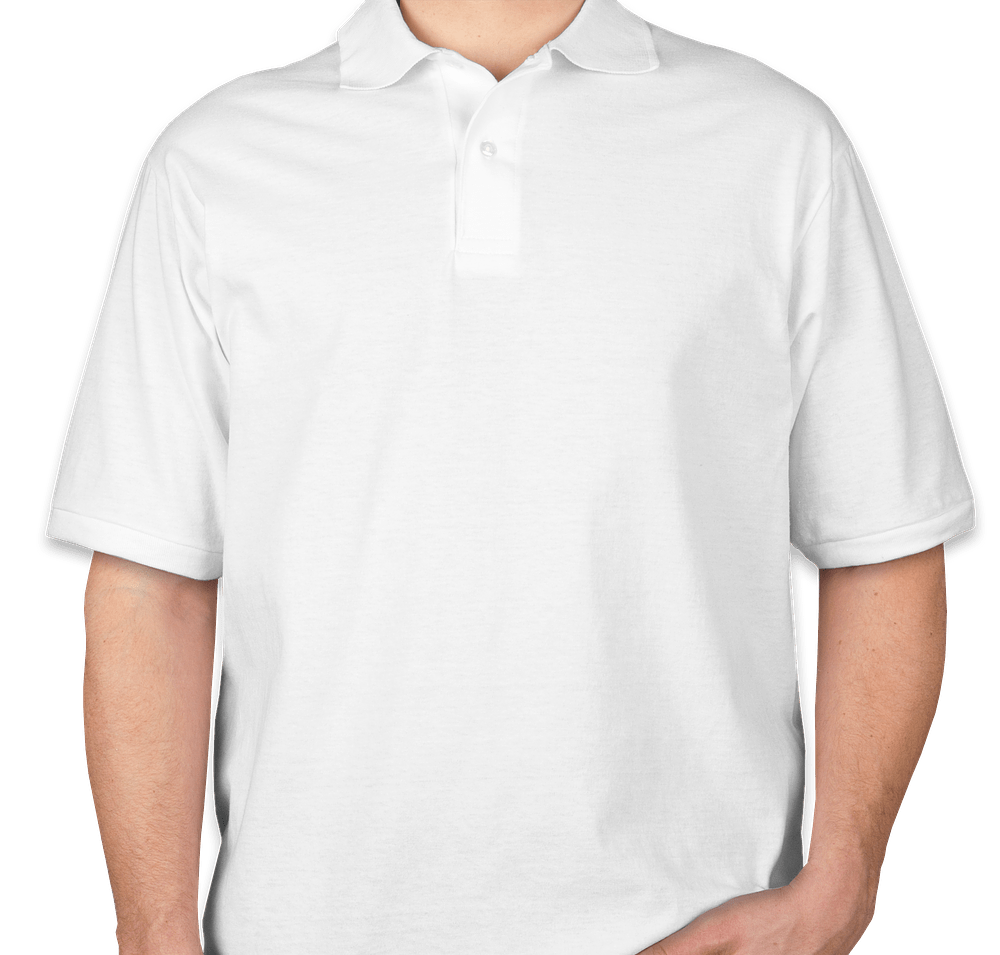
Jerzees SpotShield 50/50 Jersey Polo — Value Screen-Printed Polo
- SpotShield stain-resistant technology; 50% cotton / 50% polyester jersey knit; moisture-wicking performance
- Ribbed knit collar and cuffs; tagless interior label; XS–4XL; great value for larger uniform programs
Design Tips for Embroidery That Looks Its Best
Embroidery rewards clean, confident design. The constraints of the medium — minimum stitch size, limited color count, fabric tension — push toward logos that are simple, readable, and well-proportioned. Working with those constraints rather than against them is the difference between a logo that looks professional and one that looks muddy.
- Keep text above a quarter inch tall. At 0.25″ height, simple sans-serif fonts like Helvetica or Arial read cleanly. Serif fonts need to be at least 0.35″ tall before the fine details hold. Anything smaller will blend together and become illegible.
- Simplify before you digitize. Thin lines below 0.05″ (about 1.3mm), tiny details in corner elements, and complex gradients won’t translate to thread. Before uploading your logo to our Design Lab, trace over it mentally and ask whether every element is bold enough to survive a needle. If not, simplify it.
- Limit your thread colors strategically. Most logos work beautifully in 2–4 thread colors. Each additional color adds cost and can slow production. If your brand uses a gradient, choose the two dominant tones and let the thread texture create depth instead.
- Choose left-chest placement for most business applications. The left chest (roughly 2.5″–4″ wide) is the universal standard for professional embroidery. It’s visible when wearing a jacket, legible at conversational distance, and doesn’t distort the garment’s drape. Sleeve placement works well for secondary branding.
- Use block or bold fonts for name embroidery. If you’re adding individual names to garments — common for uniforms, awards, and recognition programs — choose a clean block font and confirm sizing at mockup stage before committing to an order.
- Pro tip: vector files produce the cleanest digitizing. AI, EPS, or SVG files give our team the most flexibility when converting your artwork to a stitch file. If you only have a PNG or JPEG, we can still work with it — our design experts will redraw or simplify as needed at no extra charge.
Customer Story: St. Mary Teachers
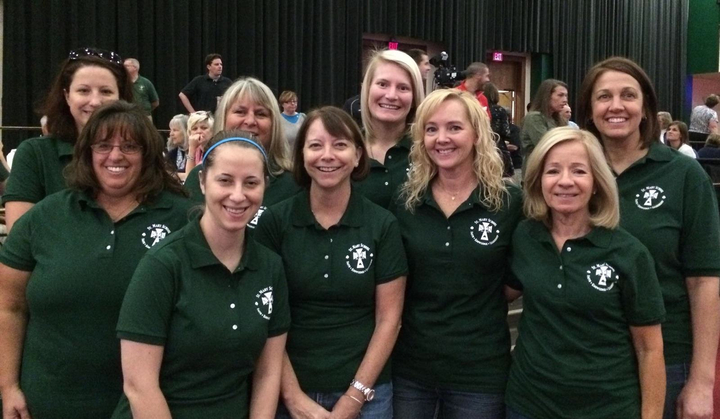
“Our St. Mary teachers showed off their new Custom Ink staff polos at our district-wide in-service on September 22! We received MANY compliments & several teachers from other schools asked where we had our polos made. We gladly shared the Custom Ink name with several schools! Our experience working with Custom Ink was incredible. In my ten years as a school administrator I can honestly say that Custom Ink has been one of the very best companies that I have worked with. The level of customer service and attention to detail is simply unmatched.”
— St. Mary School Administrator | View full story
How to Order Custom Embroidered Shirts
Ordering embroidered apparel follows the same basic process as any custom order, with a few embroidery-specific steps worth knowing in advance.
- Choose your garment. Browse our embroidery catalog, which includes polo shirts, work shirts, fleece, jackets, hats, bags, and more across brands like Port Authority, Nike, UltraClub, Eddie Bauer, and The North Face. Filter by decoration method (embroidery) and use case to narrow your options quickly.
- Upload your logo and set your placement. In our Design Lab, upload your logo file (AI, EPS, SVG, PNG, or JPG), select embroidery as the decoration method, and choose your placement. The preview will show you an approximation of how the embroidered design will look on the actual garment.
- Our team reviews your artwork. Every embroidery order goes through an art review. If your logo needs to be simplified, resized, or redrawn for clean stitching, our Inkers will reach out before production begins. This step is included at no extra charge and is what separates a polished result from a disappointing one.
- Set up your group order if needed. If you’re ordering for a team and everyone needs different sizes, use our group order feature. Each person selects their own size, and you can even allow individual payment. No more spreadsheet collection — we handle the logistics.
- Select your delivery timeline. Most orders arrive within two weeks with our free standard shipping. Rush options are available for tighter deadlines.
Frequently Asked Questions
Q: How long do custom embroidered shirts last compared to screen-printed shirts?
Embroidered shirts usually last the lifetime of the garment. Because thread is stitched into the fabric rather than printed on top of it, there’s no surface layer to crack, peel, or fade. Screen-printed shirts can look great for years with proper care, but they’re more vulnerable to cracking and fading over time, especially with frequent washing. For garments worn daily or laundered frequently, embroidery is the more durable choice.
Q: What is the minimum order for custom embroidered polo shirts?
Many embroidered polo styles are available with low minimums, including no minimum on select products. Check the product details page for the specific style you’re considering to see the minimum for that garment. For orders of 12 or more, you’ll typically see the best per-piece pricing.
Q: Can I embroider a complex logo with many colors on a polo shirt?
You can include up to 12–15 thread colors in an embroidered design, though most logos work best with 2–6 colors. The bigger consideration is complexity: embroidery handles clean shapes, bold text, and simple icons very well, but struggles with very fine details, thin hairlines, and gradient color transitions. Our design team reviews every artwork file before production and will let you know if simplification is needed to get a clean result.
Q: How do I get help designing my embroidered polo shirts or work shirts?
Our design experts are available by phone, chat, and email to help you refine your artwork, choose the right garment, and confirm sizing and placement. If you need a starting point, our Design Lab includes business and professional templates you can customize with your logo and brand colors. Expert review is included with every order at no additional charge.
Q: What is the difference between embroidered polo shirts and screen-printed polo shirts?
Embroidered polos use thread stitched directly into the fabric, which produces a dimensional, premium result that holds up to repeated washing. Screen-printed polos use ink applied to the surface, which allows for more color and design complexity at a lower per-piece cost for larger quantities. Embroidery is the standard choice for professional uniforms and corporate apparel. Screen printing works well for larger runs where budget efficiency matters more than the tactile quality of the decoration.
Q: How far in advance should I order embroidered shirts?
Most embroidered apparel orders arrive within two weeks with our free standard shipping. If you have a specific event or deadline, we recommend ordering at least three weeks out to give the art review process time to run without pressure. Rush options are available through our delivery options page if you’re working with a tighter timeline.
Q: Can I add individual names to embroidered work shirts or polo shirts?
Yes. Names and numbers can be added to embroidered garments through the customization process. This is a popular option for uniforms, recognition programs, and team gear. Choose a clean block font and confirm sizing at the mockup stage — text at smaller than a quarter inch tall can lose legibility in thread.
Q: Are bulk discounts available for embroidered polo shirts and work shirts?
Yes. Pricing per piece decreases as quantity increases for most embroidered styles. To see pricing for your specific quantity, change the order count on any product page to see the price tier for that order size. For larger programs — ongoing uniform orders or company store programs — our bulk ordering options and Online Stores feature can simplify the logistics considerably.
Ready to put your logo on apparel that actually lasts? Browse our full custom embroidered apparel catalog, explore our most popular embroidered polo, or reach out to our design team anytime.

The Custom Ink Staff is a team of design enthusiasts and promo product experts dedicated to bringing your ideas to life. From screen printing secrets to the latest trends in custom gear, we draw on decades of collective experience to help you create something unforgettable.