Digital Printing (DTF/DTG) Custom T-Shirts
 Posted By Lissa Eckert —
Lissa has been helping customers create their perfect custom swag at Custom Ink since 2014 and loves to share her insights, tips, and tricks.
SHARE:


We always choose the best printing method for your order for high-quality results that you’ll love. We may choose digital printing (vs. screen printing) when the design has very detailed art or photos, when you only need a low quantity or when you need a lot of customization (such as personalized names and numbers on team jerseys).
Digital printing produces excellent results quickly and works great on 100% and cotton-heavy blends. When we refer to “digital printing”, we are referring to DTG (direct to garment) printing or DTF (direct to film). With DTG, a specialized printer sprays water-based ink directly onto the fabric. With DTF, the design is printed to a film that’s coated with adhesive powered then heat-pressed onto the garment.
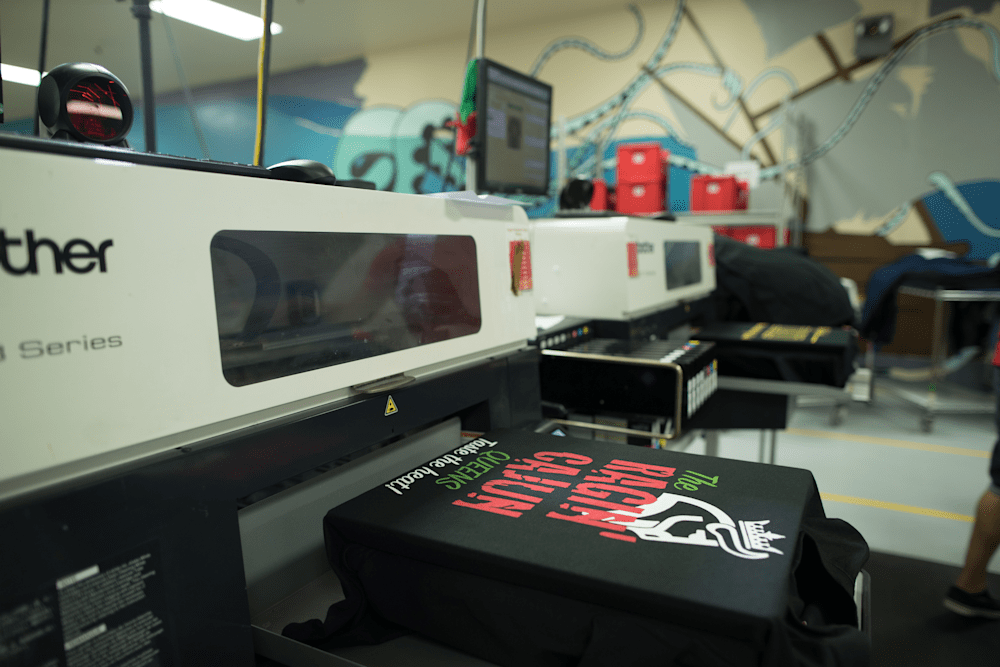
Digital printing is perfect for no minimum orders. Check out some of our fav no minimum products:
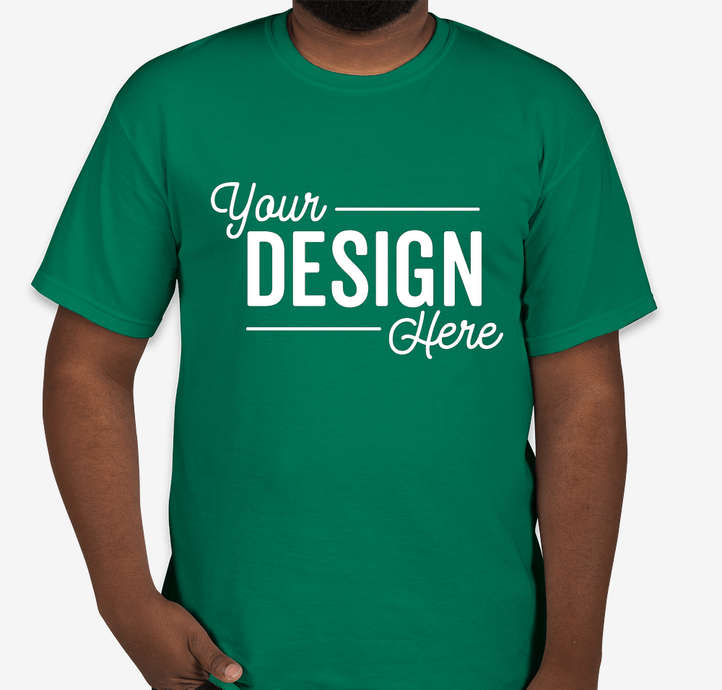
Gildan Ultra Cotton T-shirt
- 100% US cotton (most colors)
- OEKO-TEX certified low-impact dyes
- Fair Labor Association (FLA) participant
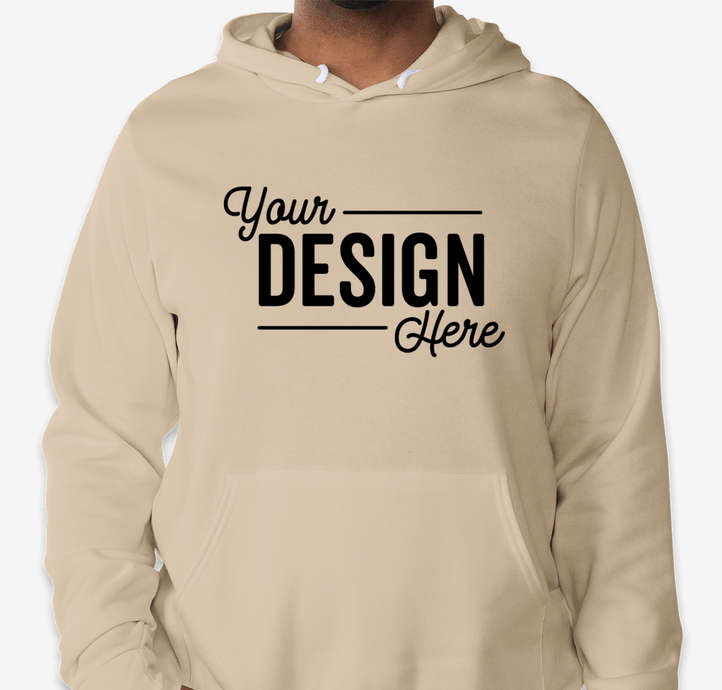
Bellal + Canvas Ultra Soft Pullover Hoodie
- Combed and ringspun cotton/polyester fleece
- Kangaroo pouch pocket
- WRAP-certified and FLA participant
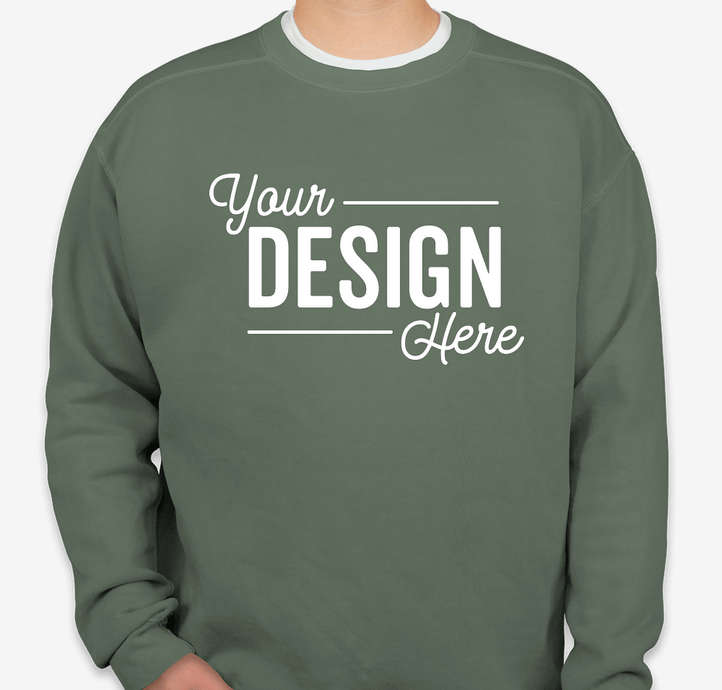
Comfort Colors Crewneck Sweatshirt
- 80/20 ringspun US cotton/polyester
- Garment dyed
- US Cotton Trust Protocol member
Contact us anytime if you’d like more details about the printing process! And read on for a full guide to everything you could want to know about digital printing for custom t-shirts.
In This Article
- What Is Digital Printing?
- DTG vs. DTF: Key Differences
- Digital vs. Screen Printing: When to Choose Which
- Design Tips for Digital Printing
- Top Products for Digital Printing
- Frequently Asked Questions
Key Takeaways
- DTG prints ink directly into the fabric; DTF heat-presses a design from film onto the garment — DTG produces a softer feel and sharper detail on cotton; DTF works on virtually any fabric type and produces more vibrant colors on dark garments.
- Full-color digital designs cost the same regardless of how many colors are in the artwork — unlike screen printing, which charges per ink color, digital printing treats a 15-color illustration the same as a 2-color logo.
- Screen printing is still the better choice for large, simple orders — once you’re ordering 24+ pieces with a straightforward design, screen printing typically delivers lower cost per unit and more durable ink bonding.
What Is Digital Printing?
Digital printing applies designs to garments using inkjet-based technology — the same fundamental approach as a desktop printer, adapted for fabric. Unlike screen printing, which requires a separate physical screen for each color in a design, digital printing reads a digital file and applies the full design in a single pass. There are no screens to burn, no color separations to manage, and no minimum quantity required to make the economics work.
The two main digital methods for apparel are DTG (direct to garment) and DTF (direct to film). They’re related technologies but deliver meaningfully different results. Understanding how each works makes it easier to choose the right method for your design, fabric, and order size.
DTG (Direct to Garment)
DTG places the finished garment directly onto a printing platen and applies water-based ink through inkjet print heads onto the fabric surface. The ink soaks into the cotton fibers — rather than sitting on top — which produces a soft, breathable print that feels like part of the shirt. DTG works best on 100% cotton and cotton-heavy blends. It’s the most precise digital method for photographic images, fine gradients, and complex multi-color artwork.
On dark garments, DTG requires a white ink base layer (and pre-treatment of the fabric with a bonding agent) before the color inks are applied. This extra step ensures colors read correctly against the dark background, but it also means dark-garment DTG prints take slightly longer and cost a bit more than light-garment prints.
DTF (Direct to Film)
DTF prints the design onto a special PET transfer film, applies an adhesive powder, cures the film with heat, and then heat-presses the resulting transfer onto the garment. Because the ink never interacts directly with the fabric, DTF works on virtually any material — cotton, polyester, blends, performance fabrics, nylon, denim, and even harder-to-print surfaces like bags and hats. DTF doesn’t require pre-treatment, produces highly vibrant colors (especially on dark fabrics), and is often faster for larger runs. The trade-off is a slightly raised texture where the transfer sits on the fabric surface.
DTG vs. DTF: Key Differences
Both methods deliver full-color digital prints without per-color charges. Here’s how they differ in the ways that matter for custom apparel orders.
| DTG (Direct to Garment) | DTF (Direct to Film) | |
|---|---|---|
| How it works | Ink sprayed directly onto fabric surface via inkjet heads; ink bonds with fibers | Design printed onto transfer film, adhesive powder applied, heat-pressed onto garment |
| Best fabrics | 100% cotton and cotton-heavy blends (50%+ cotton). Synthetic fibers resist ink bonding. | Works on virtually any fabric — cotton, polyester, blends, nylon, performance fabrics, denim |
| Print feel | Soft — ink soaks into fiber, feels like part of the shirt; minimal texture after washing | Slight raised texture from the film transfer layer; smoother than screen printing but detectable on large fills |
| Color vibrancy | Excellent on light fabrics; colors appear slightly more muted on dark garments even with white base | Very vibrant on both light and dark fabrics — white ink base layer under every design pops colors |
| Detail/precision | Highest detail — sharp edges, fine gradients, photographic quality; ink bonds at fiber level | Excellent detail — slight reduction in crispness vs. DTG as design transfers from film to fabric |
| Pre-treatment | Required for dark garments (fabric prepped with bonding agent before printing) | Not required — no pre-treatment step |
| Durability | Very good — ink integrates with fabric; will not crack or peel; may fade slightly over many washes | Excellent — adhesive creates strong bond; less prone to fading; may crack over time on very large fills |
| Order size | Works for any quantity from 1 to 1,000+; no setup costs; same per-unit pricing at small quantities | Works for any quantity; slightly faster per-unit on larger runs |
| Best for | Photographic art, detailed illustrations, gradients, full-color designs on cotton garments; small batches | Performance fabrics, dark garments needing vibrant color, mixed-fabric orders, bags and hats |
Customer Story

“We had a great experience working with CustomInk. Our shirts turned out amazing and we wear them every Friday before we march!”
— Chris, Low Brass section
Design Inspiration
Digital vs. Screen Printing: When to Choose Which
Screen printing has been the standard for custom apparel for decades, and it’s still the right choice for many orders. Digital printing isn’t a universal replacement — it’s a better fit for specific situations. The table below maps the key decision points.
| Digital Printing (DTG/DTF) | Screen Printing | |
|---|---|---|
| Order size | Best for small orders (1–50 pieces); cost-effective at any quantity | Most cost-effective at 24+ pieces; setup cost amortizes better at volume |
| Design complexity | No color limit — photographs, gradients, 20+ colors all print the same | Best with 1–6 colors; setup charge per color; gradients require halftone simulation |
| Pricing per color | Same price regardless of number of colors in the design | Each ink color adds setup cost; simpler designs are cheaper |
| Fabric type | DTG: cotton/cotton-heavy blends. DTF: any fabric. | Works on most fabrics; particularly reliable on cotton and 50/50 blends |
| Turnaround | Fast — no screen setup; prints immediately from digital file | Requires screen creation before printing begins; setup adds time |
| Durability | Very good; may soften slightly over many washes | Excellent — plastisol ink bonds strongly to fiber; highly durable over time |
| Print feel | DTG: soft, minimal texture. DTF: slight texture on larger fills. | Raised ink surface on design; more noticeable on large solid fills |
| Pantone matching | Not available — digital prints work in RGB/CMYK approximation | Available — specific Pantone colors can be matched exactly |
| Best for | Small-batch orders, full-color artwork, photographic designs, one-offs, personalized names | Large orders (24+) with simple designs; brand-color-critical work; workwear |
The practical summary: if you’re ordering fewer than 24 shirts, have a multi-color or photographic design, or need each shirt to be personalized with a name or number, digital printing is almost certainly the right method. If you’re ordering 50+ shirts with a 2- or 3-color design and want the lowest cost per unit, screen printing will typically be more economical.
Customer Story

“Our photo was taken in Wisconsin at our annual lake week gathering during August, where our family comes from all over the United States for a week of fun in the sun. Three generations, ranging from 10 months old to 69 years old, celebrating family and summer — boating, fishing, and CustomInk shirts!”
Design Inspiration
Design Tips for Digital Printing
Digital printing reads your artwork file directly — which means the quality of your file determines the quality of your print. These tips apply to both DTG and DTF and cover the most common issues we see when customers upload their artwork.
File Format
- PNG with a transparent background is the ideal format for most digital print artwork — the transparency prevents a white box from appearing around your design on colored or dark garments.
- AI, PSD, and PDF files are also accepted and work well for complex layered designs. If you’re uploading a PDF, make sure all fonts are embedded or converted to outlines.
- JPEG files can work for photographic designs but don’t support transparency — use PNG for any design that isn’t a solid rectangle.
Resolution
- Minimum: 200 DPI at print size. At this resolution, most designs will print cleanly. If your file was created at screen resolution (72 DPI), enlarging it will make it look blurry — the resolution doesn’t improve by changing the canvas size.
- Preferred: 300 DPI at print size. For photographic images or very fine detail, 300 DPI is the standard that ensures the print reads as sharp as the original.
- Vector files (AI, SVG, EPS) are resolution-independent — they scale to any print size without quality loss, making them ideal for logos, text, and clean graphic designs.
Color Mode
Digital printing works in RGB color mode — not CMYK. This is the opposite of traditional offset printing. If your file is in CMYK, the printer will convert it to RGB, which can cause subtle color shifts. For the most accurate result, design in RGB from the start. Our Design Lab handles this automatically when you build your design online, but if you’re uploading artwork from an external design program (Illustrator, Photoshop, Canva), check that your color settings are set to RGB.
Color Counts and Pricing
This is one of the biggest practical advantages of digital printing that’s worth stating plainly: the number of colors in your design does not affect the price. A design with 2 colors costs the same to print digitally as a design with 20 colors or a full-color photograph. This is the opposite of screen printing, where each additional ink color adds a setup charge. If you have a multi-color logo, a detailed illustration, or a photographic image, digital printing is usually the most cost-efficient method regardless of order size.
What Works Best for Digital Printing
- Photography and photorealistic artwork — DTG reproduces gradients, shading, and color depth that screen printing can only approximate with halftone dots.
- Full-color illustrations and complex graphics — anything with more than 6 colors is a strong digital candidate.
- Fine text and thin lines — DTG handles fine detail well; just ensure thin strokes are at least 1pt at print size to avoid disappearing in the print.
- Designs on dark garments (DTF) — DTF’s white ink base layer makes colors read correctly on dark backgrounds without the color muting that can occur with DTG on dark fabrics.
Not sure if your file is print-ready? Our design experts review every order before it goes to print and will flag any resolution or format issues before production begins.
Top Products for Digital Printing
For DTG specifically, fabric content is the most important product variable. Cotton absorbs water-based ink efficiently; polyester resists it. A 100% combed ring-spun cotton or high-cotton-content shirt will produce sharper, more vibrant DTG prints than a 50/50 blend. For DTF, fabric content matters much less — the transfer adheres to the surface regardless of fiber type. The three products below are our top picks across the budget, mid-range, and premium tiers for digital printing on custom t-shirts.

Bella+Canvas Jersey T-Shirt (3001) — Premium Pick
- 100% Airlume combed ring-spun cotton, 32 singles — the smoothest cotton surface available for DTG; ink soaks in evenly for crisp, accurate color
- 4.2 oz., retail fit, 86+ colors; pre-shrunk, tear-away label

Next Level Tri-Blend T-Shirt (6010) — Soft & Printable
- 50% poly / 25% combed ring-spun cotton / 25% rayon; 4.3 oz. — the 25% cotton content supports DTG; buttery soft hand feel that survives repeated washing
- 32 singles, retail fit, side-seamed; popular for lifestyle and event merch
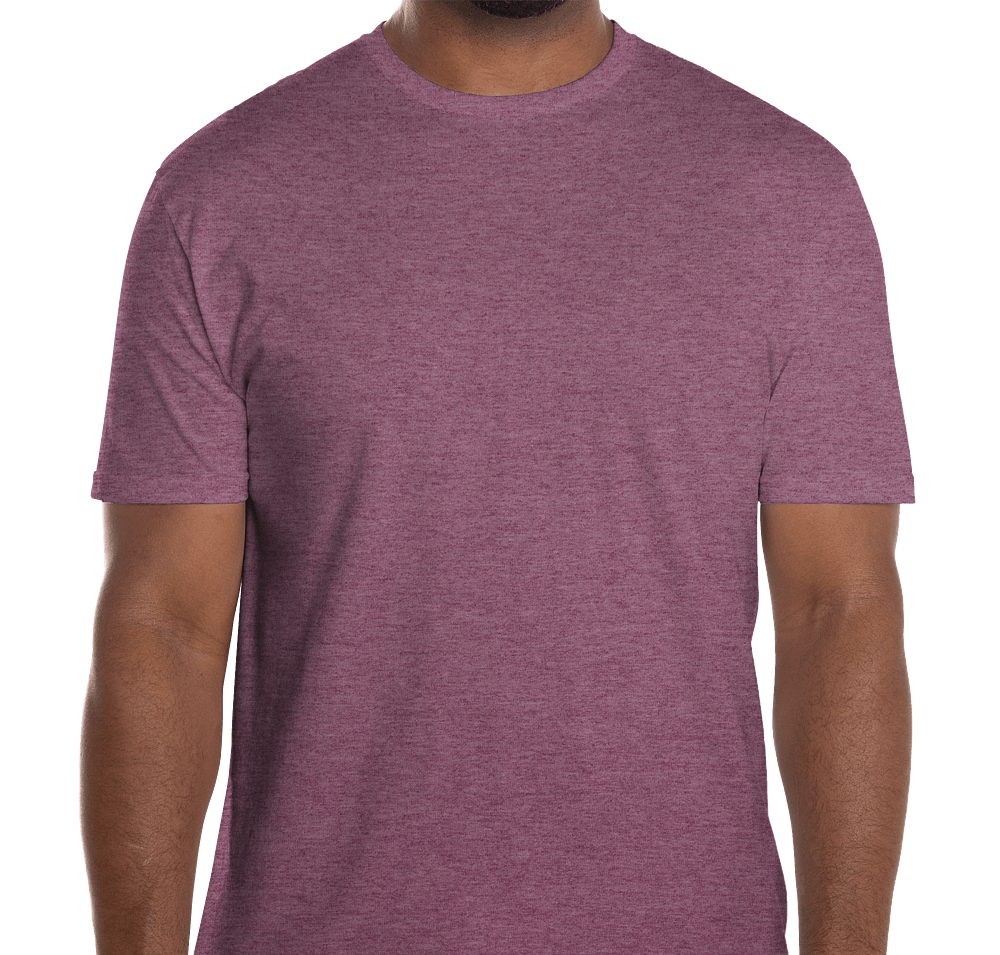
Gildan Softstyle Jersey T-Shirt — Budget Pick
- 100% ring-spun cotton (some heathers are cotton/poly); 4.5 oz. — solid DTG performance at a budget-friendly price point
- Semi-fitted, taped neck-and-shoulders, tear-away label; 60+ colors
Ready to start? Open our Design Lab to upload your artwork or start from a template — no minimum order required on many styles. For complex designs or large orders, our design experts are available to advise on the best print method before you commit. For related reading, see our guides to the softest custom t-shirt fabrics and screen printing for a full comparison of all major print methods.
Frequently Asked Questions
Q: What is digital printing for custom t-shirts?
Digital printing refers to two methods we use: DTG (direct to garment) and DTF (direct to film). With DTG, a specialized printer sprays water-based ink directly onto the fabric. With DTF, the design is printed to a film that’s coated with adhesive powder, then heat-pressed onto the garment. Both methods produce excellent results and work great on 100% cotton and cotton-heavy blends. We automatically choose the best method for your order based on your design, product, and quantity.
Q: When does Custom Ink use digital printing instead of screen printing?
We may choose digital printing when your design has very detailed art or photographs, when you need a low quantity (including single items), or when you need a lot of customization such as personalized names and numbers on team jerseys. Digital printing requires no physical setup, which makes it ideal for small orders. For larger orders with simple designs, we typically use screen printing, which creates vibrant, durable results.
Q: Can I print photographs on custom t-shirts using digital printing?
Yes, digital printing is ideal for capturing fine detail and photographic-quality designs. DTG prints your design directly onto the fabric for a soft, flexible feel with detailed results, while DTF transfers create vibrant, durable prints. For best results, we recommend using an image with a resolution of at least 200 DPI (dots per inch). Learn more about printing designs with photos.
Q: Is there a minimum order for digitally printed custom t-shirts?
No, many of our products have no minimum order requirement for digital printing. You can order as few as one custom t-shirt. Simply look for the “no-minimum” callout on our website, or browse our no minimum t-shirts collection. This makes digital printing perfect for personalized gifts or testing a design before ordering for a larger group.
Q: What fabrics work best with digital printing?
Digital printing produces excellent results on 100% cotton and cotton-heavy blends. Natural fabrics like cotton absorb the ink more readily than synthetic fabrics, creating more vibrant designs that last longer. Browse our custom t-shirts to find options suited for digital printing, including popular choices like the Gildan 100% Cotton T-shirt.
Q: How long does it take to receive digitally printed custom t-shirts?
Standard delivery is guaranteed to arrive at your door in two weeks, and shipping is always free. Need your shirts sooner? Rush delivery gets your order to you in one week for an additional 15%, and Super Rush delivery arrives in three business days for an additional 30%. Check our delivery options for more details.
Q: How does digital printing compare to screen printing in quality?
Both methods produce high-quality results, but they excel in different situations. Digital printing captures fine details and color gradients beautifully, making it ideal for photographs and complex artwork. Screen printing creates bold, vibrant colors and is more cost-effective for large orders with simple designs. We always choose the best printing method for your specific order to ensure you love the results.
Q: Can I get help designing my digitally printed custom t-shirt?
Absolutely! Our design experts are available to help you create the perfect design at no extra cost. You can also use our Design Lab to upload your artwork, add text, or start with one of our ready-to-go templates. Every design is reviewed by an artist before printing to ensure it looks great. Contact us anytime if you’d like more details about the printing process.
Q: How should I care for my digitally printed custom t-shirts?
To keep your digitally printed t-shirts looking great, turn them inside out before washing. Use cold water and dry on low heat. Avoid ironing directly over the printed areas. Following these simple care instructions will help your custom design stay vibrant wash after wash.
Q: How much do digitally printed custom t-shirts cost?
The cost depends on three main factors: the product you choose, the number of ink colors in your design, and the total quantity. With digital printing, multi-color and photographic designs don’t cost extra like they would with screen printing. Our all-inclusive pricing means you’ll always see your total upfront with no hidden fees and free standard shipping.

Lissa has been helping customers create their perfect custom swag at Custom Ink since 2014 and loves to share her insights, tips, and tricks.