How to Make Merch in 2026: The Creator’s Complete Guide
 Posted By Custom Ink Staff —
The Custom Ink Staff is a team of design enthusiasts and promo product experts dedicated to bringing your ideas to life. From screen printing secrets to the latest trends in custom gear, we draw on decades of collective experience to help you create something unforgettable.
SHARE:


Goldman Sachs projects the creator economy will reach $480 billion by 2027, and merchandise is one of the only income streams where the creator, not the platform, keeps the margin. No algorithm changes, no revenue-share tiers, no ad rates tied to engagement dips. Your brand on a product your audience actually wants to own.
We’ve helped thousands of musicians, podcasters, streamers, and online creators build creator merch that sells, and the two questions we hear first are almost always the same: how big does my audience need to be, and how much is this going to cost me?
This guide answers both, then covers what to make, how to design it, and how to set up a store.
In This Article
- How Many Subscribers Do You Need to Make Merch?
- What Merch Should You Make First?
- How Much Does It Cost to Make Merch?
- How to Design Your Merch
- How to Set Up a Merch Store
- Frequently Asked Questions
Key Takeaways
- No minimum audience required, but expectations matter: Creators with 1,000–5,000 subscribers can earn $50–$200/month from merch with zero upfront investment. Engagement quality consistently outperforms raw follower count; a creator with 10,000 loyal subscribers will outsell one with 100,000 passive ones.
- T-shirts are your anchor product: The Gildan Softstyle and Bella+Canvas Jersey T-Shirt cover the two main buyer segments. Add a Gildan hoodie and you’ve covered 80%+ of what fans buy.
- Bulk orders can improve your profit-margins: Per-unit cost drops in bulk. The right strategy is to test designs with no-risk print-on-demand first, then scale to bulk once a design proves out.
How Many Subscribers Do You Need to Make Merch?
Any creator with an audience, even a small one, can make and sell merch today. The real question is what kind of revenue to expect at different audience sizes, and how much risk you’re willing to carry.
| Audience Size | Recommended Approach | Expected Monthly Merch Revenue |
|---|---|---|
| Under 1,000 followers | Print-on-demand only; zero inventory risk | $0–$50 (occasional sales) |
| 1,000–5,000 | Print-on-demand; first limited drop to test designs | $50–$200/month |
| 5,000–25,000 | POD for testing; bulk orders on proven designs | $200–$800/month |
| 25,000–150,000 | Regular drops, bulk ordering, multiple SKUs | $800–$5,000+/month |
| 150,000+ | Full merch system with seasonal launches | Significant income stream |
Conversion rates for creator merch typically run between 0.5–2% of your audience per drop, so a creator with 10,000 actively engaged followers can move 50–200 units. That’s more than enough to justify a bulk order and earn a real margin.
The number that matters more than follower count is engagement quality. A cautionary reference point: the influencer with 2.9 million Instagram followers who couldn’t sell 36 shirts in two weeks. Passive audiences don’t buy merch. Communities do.
Kevin Kelly’s framework from 2008 still holds: 1,000 “true fans” each spending $25–$50 on merch per year equals $25,000–$50,000 in annual merch revenue. You don’t need millions of subscribers. You need a specific group of people who actually want to carry your brand.
YouTube’s merch shelf requires meeting the YouTube Partner Program threshold (1,000 subscribers plus 4,000 watch hours). TikTok Shop requires 5,000 followers. But you don’t need either platform’s native merch tools to start selling. A direct link in your bio to a store works at any audience size.
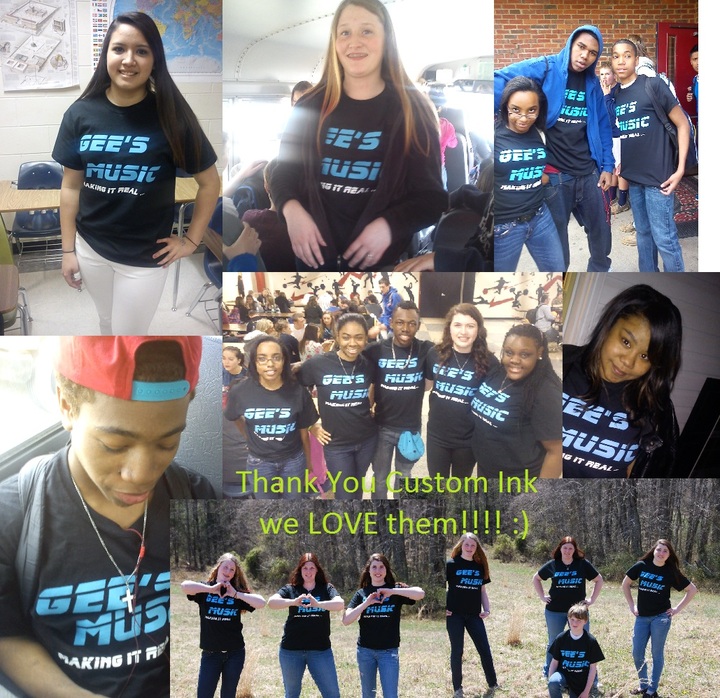
“Thanks to Custom Ink, I have many more followers for my music career. They look at the shirts and their mouths are DROPPED with amazement and interest and plead for a shirt right away!”
Featured Products from This Story

Gildan Ultra Cotton T-shirt
- 6 oz., 100% ring-spun cotton; substantial feel that holds its shape wash after wash
- Available in 50+ colors; standard unisex fit from S–3XL
What Merch Should You Make First?
Two products cover most of what fans actually buy: t-shirts and hoodies. According to our 2026 Swag Trends Survey, 30% of buyers said a t-shirt would be their single must-have item if limited to one, and 62% are actively planning to try heavier-weight fabrics for their next order. That’s the market telling you exactly what it wants: a well-made tee with some weight to it, plus a hoodie for colder months and year-round wear.
The fabric specs matter more than most guides acknowledge. They determine how your print looks, how long it lasts, and whether a fan wears the shirt once or for years. The table below shows how the three core creator-merch products compare:
| Spec | Gildan Softstyle | Bella+Canvas | Gildan Midweight |
|---|---|---|---|
| Type | T-shirt | T-shirt | Pullover hoodie |
| Weight | 4.5 oz. | 4.2 oz. | 8 oz. |
| Material | 100% ring-spun cotton | 100% Airlume® combed cotton, 32 singles | 50/50 cotton/poly |
| Fit | Modern classic (tubular) | Retail fit (side-seamed) | Standard |
| Sizes | S–3XL | XS–4XL | S–5XL |
| Best for | Budget-friendly soft tee; large drops | Premium feel, retail aesthetic | Classic merch hoodie |
| Standout tech | Softstyle® fabric | Airlume®, bluesign® certified dyes | Heavy Blend™, MVS Air spinning |
The Softstyle is the high-volume workhorse: it prints cleanly, costs less per unit, and fans are unlikely to notice the difference from a premium tee unless they’re comparing side by side.
The Bella+Canvas is for creators whose brand leans premium or streetwear; the retail fit and Airlume® cotton give it a softer, more tailored feel that commands a higher price point.
For hoodies, the Gildan Midweight produces a smoother print surface and resists pilling far better than lower-grade fleece.
According to a PPAI consumer study, 9 in 10 people can correctly recall branding on a product they received, but only if the product is worn regularly. Start with quality your fans will actually reach for.

“We bought these shirts to sell at the merchandise table for our band, Soultrap. We all picked out a shirt in our size to keep and during band practice, took a picture in the back of the production facility where we practice in Georgia.”
Core Creator Merch Products

Gildan Softstyle Jersey T-shirt: Budget-Friendly Drop
- 4.5 oz., 100% ring-spun cotton with Softstyle® fabric technology
- Non-topstitched rib collar; modern classic fit; S–3XL

Bella+Canvas 3001 Jersey T-shirt: Premium Drop
- 4.2 oz., 100% Airlume® combed and ring-spun cotton, 32 singles; bluesign® certified dyes
- Retail side-seamed fit with shoulder taping; XS–4XL, 86+ colors
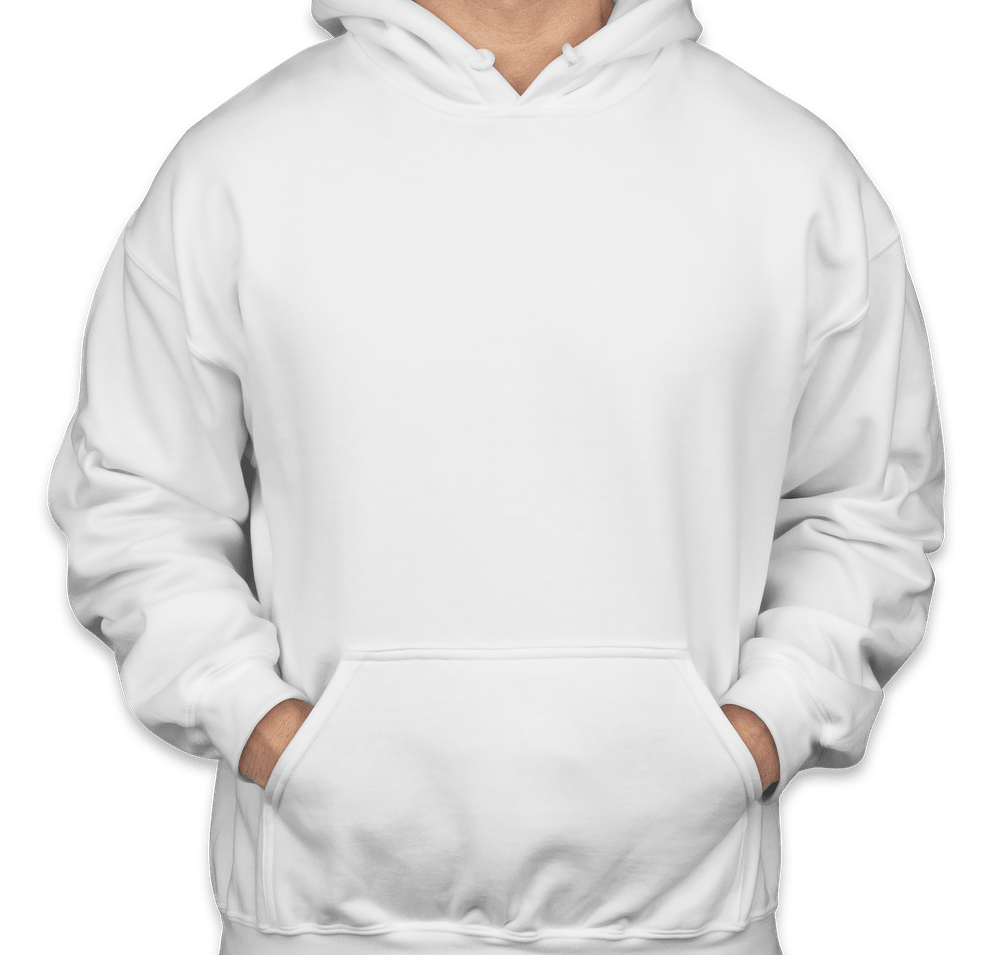
Gildan Midweight Hoodie: Classic Merch Hoodie
- 8 oz., 50/50 cotton/poly
- Double-lined hood, dyed-to-match drawcord; S–5XL
How Much Does It Cost to Make Merch?
Cost depends entirely on the approach you take: print-on-demand or bulk ordering. Both are legitimate, and the right answer depends on where you are in building your audience. Understanding the difference early will save you either money or inventory risk.
Print-on-Demand vs. Bulk Orders
Print-on-demand (POD) services print and ship one item at a time as orders come in. You pay nothing upfront, hold no inventory, and risk nothing. The tradeoff is a higher per-unit cost ($10–$16 per shirt) that compresses your margin.
Bulk ordering requires a minimum quantity (typically 12–50+ shirts) but drops the per-unit cost to $5–$10, gives you better print quality through screen printing, and results in a product that lasts significantly longer. At 100 shirts priced at $25 retail, the margin difference between POD and bulk can be $500–$1,000 per drop.
| Factor | Print-on-Demand | Bulk (50–100+ units) |
|---|---|---|
| Per-unit cost (basic tee) | $10–$16 all-in | $5–$10 total |
| Upfront investment | $0 | $250–$1,000+ |
| Profit at $25 retail | ~$10–$14/shirt | ~$15–$20/shirt |
| Minimum order | 1 unit | 12–50+ |
| Inventory risk | Zero | Unsold stock possible |
| Print method | DTG (digital) | Screen print (standard) |
| Print durability | ~50+ washes | 100+ washes; ~2× longer |
| Best for | Testing designs; under 50 sales/drop | Proven designs; 50+ sales/drop |
The strategy that works: start with POD to test your designs with zero financial risk, then switch to bulk once a design is proven. If a design sells 50 shirts through a POD platform, you’ve already validated demand, and your next run at bulk pricing puts an extra $250–$500 in your pocket on the same order.
Our no minimums on select products and bulk discount pricing adjust automatically at checkout as you add quantity, so it’s easy to see the cost difference in real time.

“Roommate and I sporting our Dylan Lloyd (musician I manage) merch! Promoting his show 6/1 at Shubas in Chicago! Uploaded our already created logo, had shirts in a week and have already sold about 25 in a day or two!”
Featured Products from This Story

Gildan 100% Cotton T-shirt
- Lightweight 100% cotton; budget-friendly entry point for first-time merch drops
- Standard unisex fit; YXS–3XL, available in dozens of colors
How to Design Your Merch
Good merch design is usually simpler than creators expect. The most common mistake is over-designing: too many colors, too many elements, a layout that looks great on a phone screen but muddy on a shirt. The designs that sell best are typically a clean logo, a recognizable phrase from your content, or a visual that means something specific to your community.
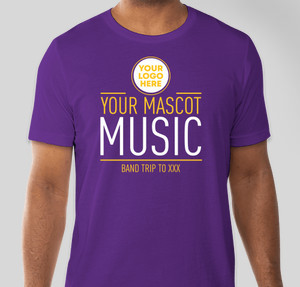
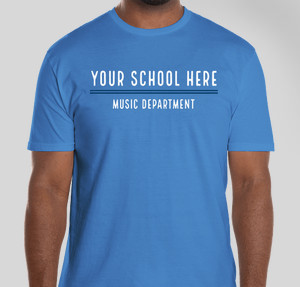
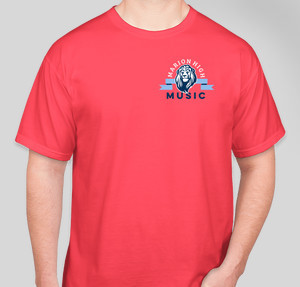
Our Design Lab lets you upload your existing logo or build from scratch using our clipart library and font collections, with a live preview that shows exactly how the design will look on the actual product before you order. If you’re not sure where to start, our template library has hundreds of starting points organized by theme. Three worth exploring for creator merch:
If you want feedback before ordering, our design experts are available by phone seven days a week and will review your artwork before production. We catch placement issues, resolution problems, and color concerns that are easy to miss when you’re deep in your own design. There’s no charge for this.
One practical note on color: our 2026 Swag Trends Survey found that 67% of buyers only consider merch successful if recipients wear it voluntarily. That’s the bar. Colors and designs that feel current and specific to your audience will always outperform generic options, no matter how clean the execution.

“This is a photo of myself and my dog Tundra. She is helping me celebrate the launch of my new merchandise line, Merch by Amber. Thank you to Custom Ink for helping my dreams come true.”
Featured Products from This Story

Gildan Midweight 50/50 Crewneck Sweatshirt
- 50/50 cotton/poly blend; soft, substantial weight ideal for branded line launches
- Classic crewneck silhouette; works well as a second SKU alongside a tee drop
How to Set Up a Merch Store
Once you have your products and designs, you have two primary options for taking orders: a Custom Ink Online Store (ideal for ongoing sales across multiple products) or a time-limited campaign through our Fundraising platform (ideal for a single drop or presale). Both let fans order directly, pay individually, and choose their own sizes, with no spreadsheets and no collecting money manually.
For creators just starting out, a campaign-style drop is often the cleanest first approach. You set a goal, share the link with your audience, and we handle production and fulfillment. It’s how a lot of musicians, podcast hosts, and YouTube creators run their first drop, with low operational overhead, no upfront cost, and a clear deadline that creates urgency for your audience to order.
For creators ready to build a permanent storefront, our Online Stores feature lets you run multiple products simultaneously, set your own pricing and margins, and share a single link that handles everything from payment to fulfillment.
We’ve also put together a dedicated page with more resources specifically for content creators at customink.com/audience/content-creators.
How to Launch Your First Merch Drop
- Choose your product and design. Start with one or two items. A tee and a hoodie is a proven combination. Upload your logo or build a design in our Design Lab.
- Set your price and store duration. Price your merch to cover production cost plus your target margin. A two-week window with a set close date tends to drive urgency and stronger conversion than an always-open store.
- Promote to your audience. Share the link across all your platforms on launch day. Plan a reminder post at the midpoint and a “last chance” post 48 hours before close. Creators who promote merch in a dedicated video or stream episode see meaningfully higher conversion than those who mention it in passing.
- Review, scale, and repeat. After your first drop, you’ll know which designs and products actually moved. Use that data to make better decisions on your next run: better products, larger quantities, better margins.
The standard delivery window is two weeks with free shipping on all orders. Rush options are available if you need product for a specific event or stream date.
Frequently Asked Questions
How many subscribers do I need to start selling merch?
There’s no minimum subscriber count required to make or sell custom merch. With print-on-demand options, you can launch with zero upfront cost regardless of audience size. The practical threshold for seeing meaningful revenue is around 1,000–5,000 engaged followers. At that point, a 1–2% conversion rate yields 10–100 orders per drop, which is enough to justify a bulk order on proven designs.
How much does it cost to make custom merch?
With print-on-demand, cost is $0 upfront. You pay a per-unit production cost of $10–$16/shirt only when a fan orders. With bulk ordering, you pay $5–$10 per shirt with a minimum quantity, typically earning $5–$10 more per unit in profit. Our pricing adjusts automatically in checkout as quantity increases, so you can see exactly what a larger run would cost before committing.
What’s the best merch item for content creators?
Custom t-shirts are the anchor product for creator merch. They’re the item most fans are willing to buy and most likely to actually wear. Hoodies are a strong second for any audience in a cooler climate or with a streetwear-leaning aesthetic. Hats, tote bags, and accessories work well as add-ons once you have a core apparel program running.
Can my fans pay for their own merch individually?
Yes. Our group order feature and Online Stores are both set up so each fan can pay separately and enter their own shipping address. You don’t collect money or manage a spreadsheet. We handle payment, production, and fulfillment directly with each buyer.
Can I order a sample before doing a full run?
We offer samples on most products, typically for a small fee plus shipping. We recommend ordering a sample before your first large bulk run to confirm fit, color, and print placement. You can also use our Design Lab preview to see a digital mockup on the exact product before ordering anything.
How long does it take to get a merch order?
Standard orders arrive within two weeks with free standard shipping. If you need product for a specific stream date, event, or convention, rush delivery options are available for an additional fee. We recommend placing your order at least three weeks ahead of any hard deadline, especially for larger quantities or multi-color designs.
Do I need a minimum order to make merch?
Many products have no minimum order requirements. Others have minimums as low as 6 or 12 units. Check the product detail page for specific minimums. With no-minimum products, you can order a single shirt to test a design before committing to a larger run.

The Custom Ink Staff is a team of design enthusiasts and promo product experts dedicated to bringing your ideas to life. From screen printing secrets to the latest trends in custom gear, we draw on decades of collective experience to help you create something unforgettable.