Pigment-Dyed Custom T-Shirts & Sweatshirts: What They Are, How to Customize Them & Care Tips
 Posted By Lissa Eckert —
Lissa has been helping customers create their perfect custom swag at Custom Ink since 2014 and loves to share her insights, tips, and tricks.
SHARE:


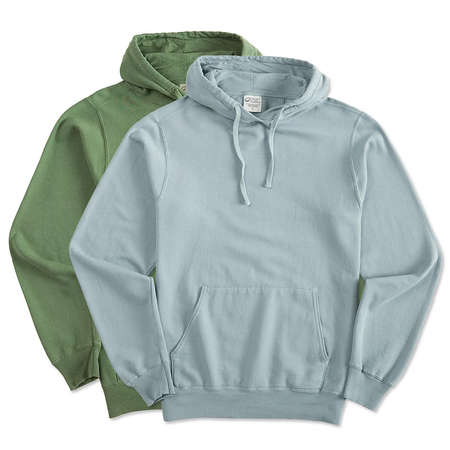
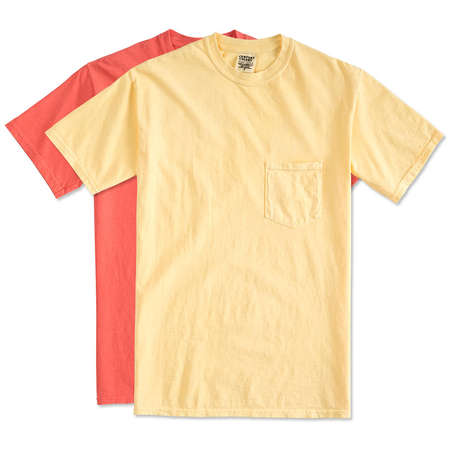
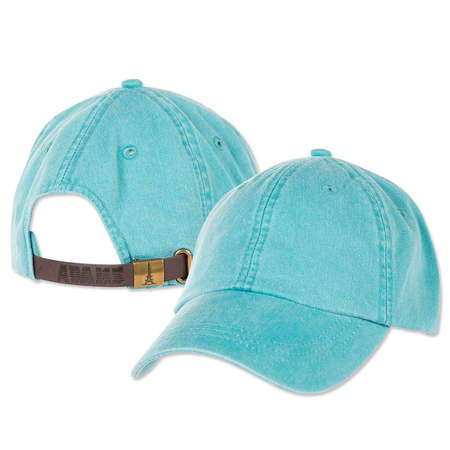
The U.S. secondhand apparel market grew four times faster than broader retail in 2025, driven by Gen Z and Millennials chasing the worn-in, sun-faded look that used to only come from years of washing. Pigment-dyed t-shirts deliver that aesthetic on day one.
The dyeing method produces a naturally muted, slightly faded appearance with organic color variation across each garment — a premium look that’s become the go-to for breweries, lifestyle brands, campus organizations, and anyone who wants custom merch that feels retail-quality rather than mass-produced.
This guide covers what pigment dyeing actually is, how it differs from garment dyeing and standard dyeing, which brands carry it, and everything you need to know before ordering custom pigment-dyed shirts.
In This Article
- What Is Pigment Dyeing?
- Who Should Choose Pigment-Dyed T-Shirts
- Printing & Embroidery on Pigment-Dyed Fabric
- How to Care for Pigment-Dyed T-Shirts
- Frequently Asked Questions
Key Takeaways
- Pigment dyeing coats the fiber surface rather than bonding to it — giving every shirt a naturally muted, vintage appearance that reactive-dyed garments can’t replicate without artificial processing.
- Plastisol screen printing is the recommended method for pigment-dyed fabric; water-based inks and discharge printing don’t perform well, and dark-colored pigment garments require low-bleed ink formulas to prevent dye migration.
- Comfort Colors is the dominant brand in pigment-dyed custom apparel, offering 88+ colorways across tees, tanks, hoodies, and sweatshirts — all certified by OEKO-TEX for low-impact dye processes.
What Is Pigment Dyeing?
Pigment dyeing applies insoluble color particles — pigments — to fabric using a polymer binder as an adhesive. The process works in three steps: the fabric is padded with a pigment-binder mixture, then dried, then cured at high heat. The curing step locks the binder into a thin film on the fiber surface that physically traps the pigment in place. If you cut a pigment-dyed cotton fiber in half, the inside would be white — the color lives entirely on the surface, which is what gives these shirts their characteristic soft, faded appearance rather than the saturated, punchy look of traditionally dyed garments.
It helps to know how pigment dyeing stacks up against the two other methods you’ll encounter in custom apparel: reactive dyeing (the standard for most blank t-shirts) and garment dyeing (a finishing process, not a dye type). The table below covers the practical differences.
| Feature | Pigment Dyeing | Reactive Dyeing | Garment Dyeing |
|---|---|---|---|
| How it works | Pigment particles bonded to fabric surface via binder | Dye forms a covalent chemical bond deep inside the fiber | A timing method — garment is dyed after full construction (can use pigment or reactive dyes) |
| Color look | Muted, sun-faded, vintage | Vivid and saturated | Organic variation; looks lived-in from day one |
| Color consistency | Intentional batch-to-batch variation | Highly consistent across dye lots | Seams and collars absorb differently — each piece unique |
| Wash fastness | Fair — softens further over time | Excellent — color holds wash after wash | Depends on dye type used |
| Best for | Vintage, lifestyle, brewery, campus merch | Corporate uniforms, sports teams needing consistent color | Premium retail-quality feel; lifestyle brands |
| Water usage | Very low — no wash-off step needed | High — extensive rinsing required | Varies by dye type |
One note on Comfort Colors specifically: the brand uses both garment dyeing (as a process) and pigment dyes (as the chemistry). So when you see “garment-dyed” on a Comfort Colors label, you’re getting both the surface-level pigment color and the organic variation that comes from dyeing after the garment is assembled. That combination — plus ring-spun cotton construction and double commercial wash for pre-shrinking — is what makes Comfort Colors the benchmark for this category.
Why Each Shirt Looks Slightly Different
The variation you see across pigment-dyed garments isn’t a quality control issue — it’s built into the process. Seams, collars, and ribbing absorb pigment at different rates than flat panels. Fabric tension during construction affects uptake. Even small differences in cotton fiber porosity from garment to garment create slight shade variation. Comfort Colors explicitly notes this on their product pages. The result is that no two pigment-dyed shirts are identical, which is part of what makes them feel premium rather than mass-produced.
Customer Story

“This summer my family went on vacation together out west. We had 3 RVs and toured 7 national parks throughout Utah, Arizona, and Nevada. As a treat, I ordered CustomInk shirts for everyone. We love the shirts, especially the #RVNUTTS design on the back. It also made it helpful while traveling through the airport with kiddos wearing the same shirts!! These shirts will help us remember this trip for years to come.”
Featured Product from This Story
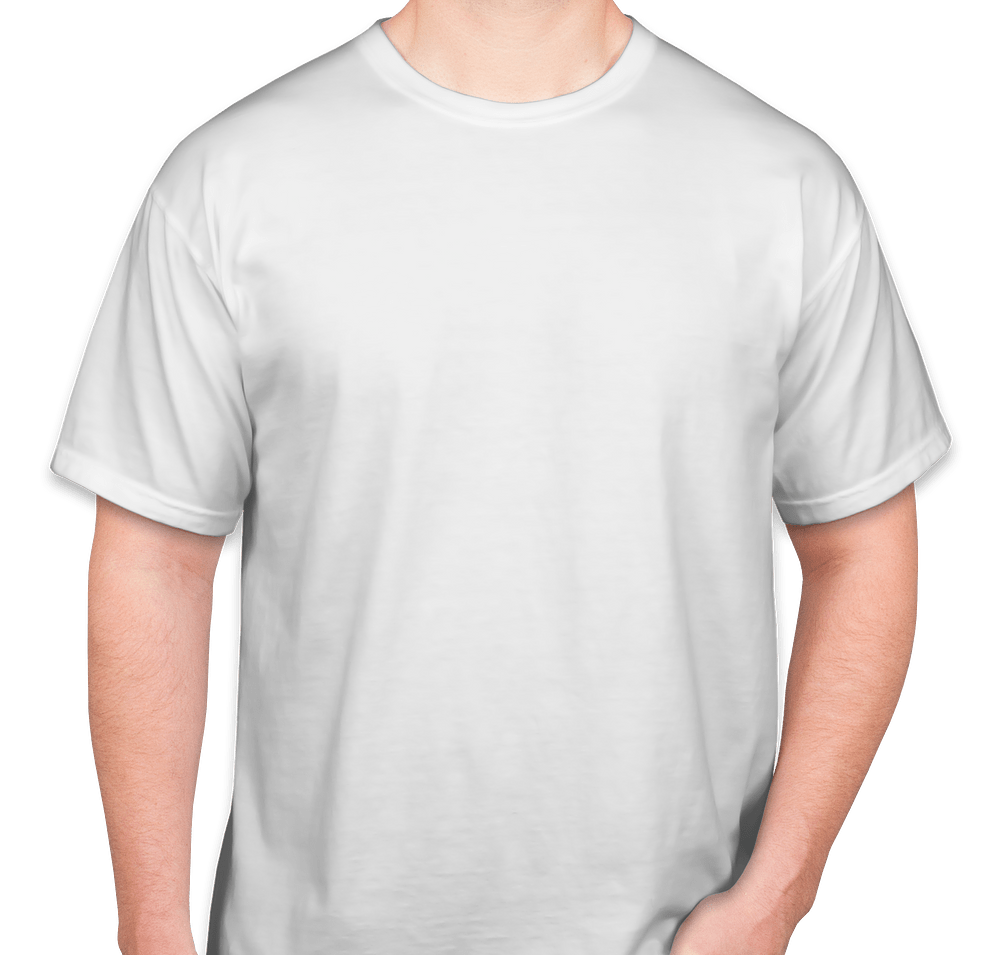
Comfort Colors 100% Cotton T-Shirt (Style 1717)
- 6.1 oz ring-spun cotton, relaxed fit, tubular body
- 88+ pigment and reactive dye colorways; OEKO-TEX certified low-impact dyes
- Pre-shrunk with double commercial wash — virtually zero shrinkage after ordering
More Comfort Colors Styles to Consider
Comfort Colors Long Sleeve — Year-Round Wear
- Same garment-dyed construction as the short-sleeve 1717, extended into a long-sleeve cut
- Popular for outdoor events, campus orgs, and band merch in cooler months
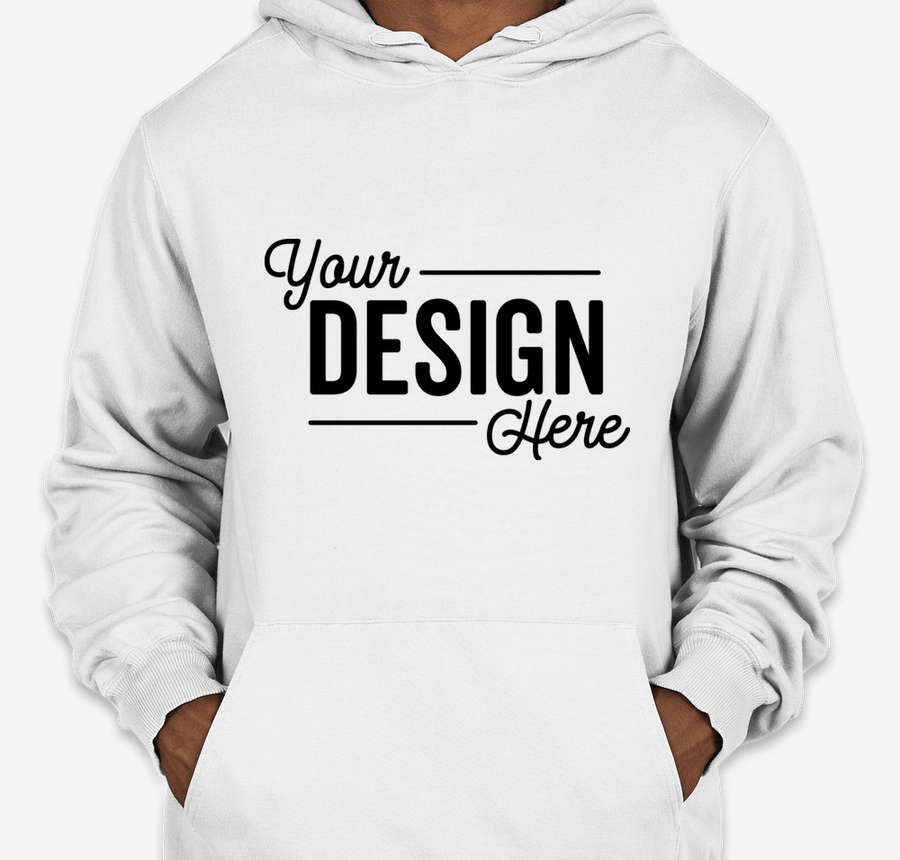
Port & Company Pigment Dyed Hoodie — Budget Option
- Midweight pigment-dyed pullover hoodie at a lower price point than Comfort Colors
- Good entry point for groups ordering pigment-dyed styles for the first time
Design Inspiration for Pigment-Dyed Shirts
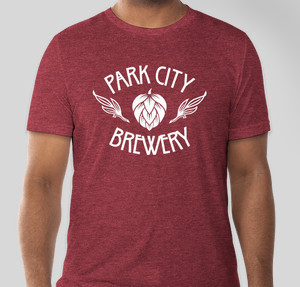
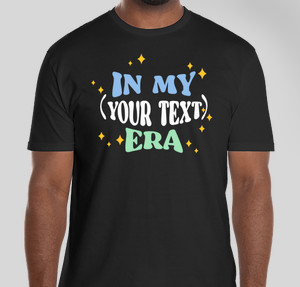
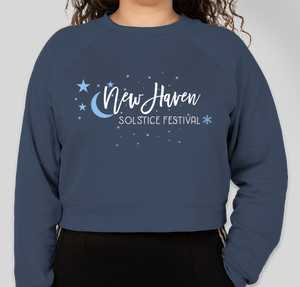
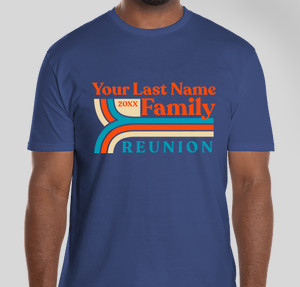
Vintage typography, distressed graphics, and minimal logos tend to look best on pigment-dyed fabric — the muted base amplifies the aged feel of the design. Here are three templates from our Design Lab that pair naturally with the aesthetic.

Who Should Choose Pigment-Dyed T-Shirts
Pigment-dyed apparel isn’t right for every order — and knowing when to choose it makes a real difference. The vintage, slightly irregular look is a feature for some use cases and a problem for others.
Best Use Cases
- Craft breweries and taprooms: The sun-faded, artisanal aesthetic matches the visual identity of craft beverage brands. Staff shirts and retail merch both work well.
- Lifestyle and outdoor brands: Any brand that wants their gear to feel like it belongs on a trail, at a beach, or in a coffee shop — not in a big-box store.
- Music, festivals, and events: The worn-in look adds perceived value to event merch. Fans keep shirts that feel like they came from a boutique, not a vendor tent.
- Greek organizations and campus groups: Comfort Colors in particular has become a staple of sorority and fraternity merch — the color range and soft hand feel are a big part of the appeal.
- Family reunions and vacations: Groups who want matching shirts that feel like real clothing rather than souvenir tees.
- Restaurants and cafes with a casual-cool brand: The faded aesthetic communicates character and authenticity — useful when your brand doesn’t want to look corporate.
When to Choose a Different Option
- Corporate uniforms requiring consistent color across all staff: Batch-to-batch variation is intentional in pigment dyeing. If every shirt needs to match exactly, reactive-dyed garments are a better fit.
- Pantone-matched brand colors: Pigment dyes produce muted tones — not the saturated, exact-match color you’d get with reactive dyeing or standard piece dyeing.
- Athletic and performance gear: Pigment dyeing works best on 100% cotton or cotton-heavy blends. Synthetic performance fabrics require different dye chemistry.
Customer Story
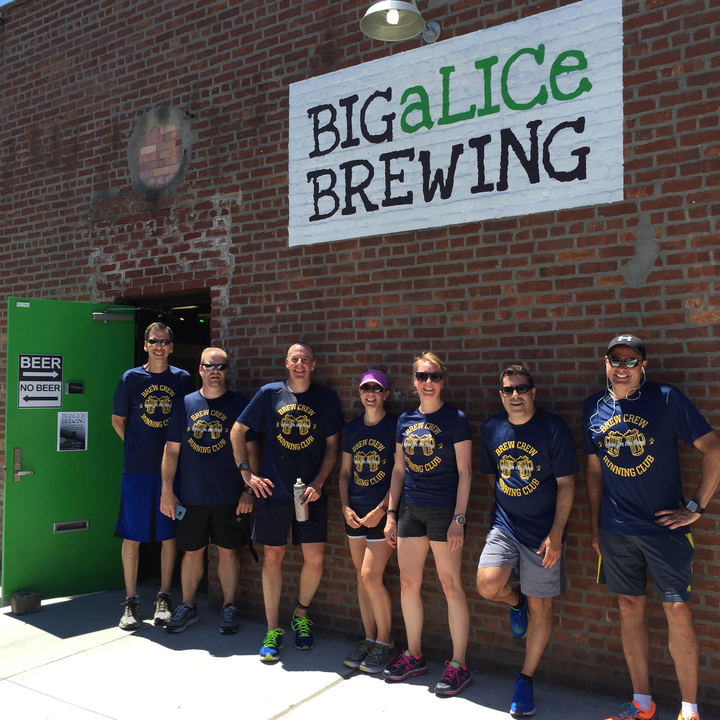
“The brew crew running club formed in 2015, and since then we have been running our way across Long Island as a group to the different breweries. Our shirts garner so much attention at all of the races thanks to the folks at CustomInk!”
Popular Pigment-Dyed Styles for Groups and Events
Beyond the classic tee, we carry pigment-dyed and garment-dyed styles across multiple categories for groups who want a cohesive look.
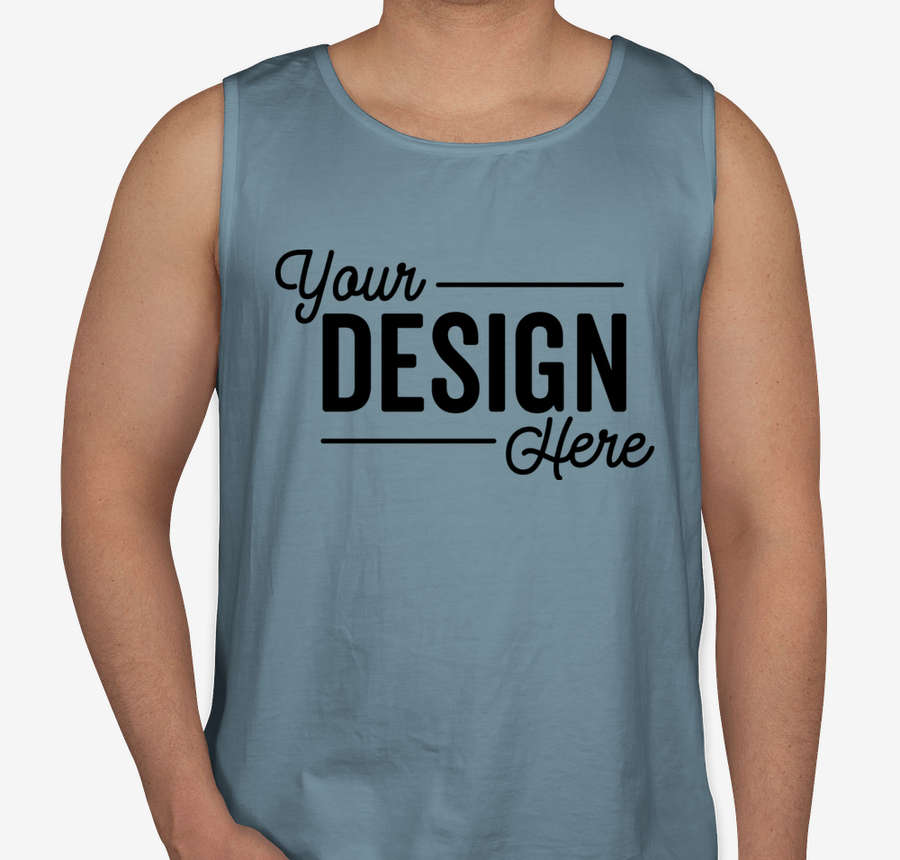
Comfort Colors 100% Cotton Tank — Summer Events
- Same ring-spun cotton and garment-dye construction as the classic tee
- Wide strap design; popular for beach events, bar crawls, and outdoor festivals
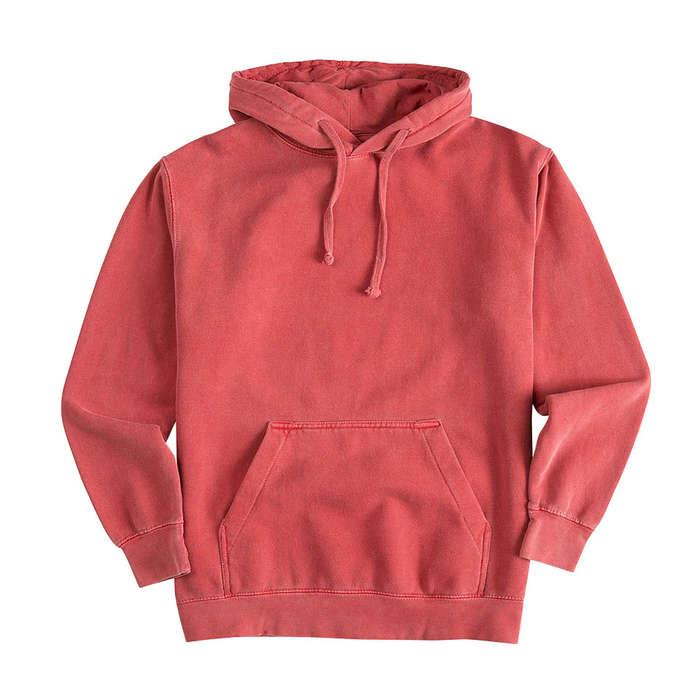
Comfort Colors Hooded Sweatshirt — Fall & Winter Merch
- 9.5 oz 80/20 ring-spun cotton/poly; garment-dyed for the same vintage finish
- Extends any pigment-dyed merch line into cooler months
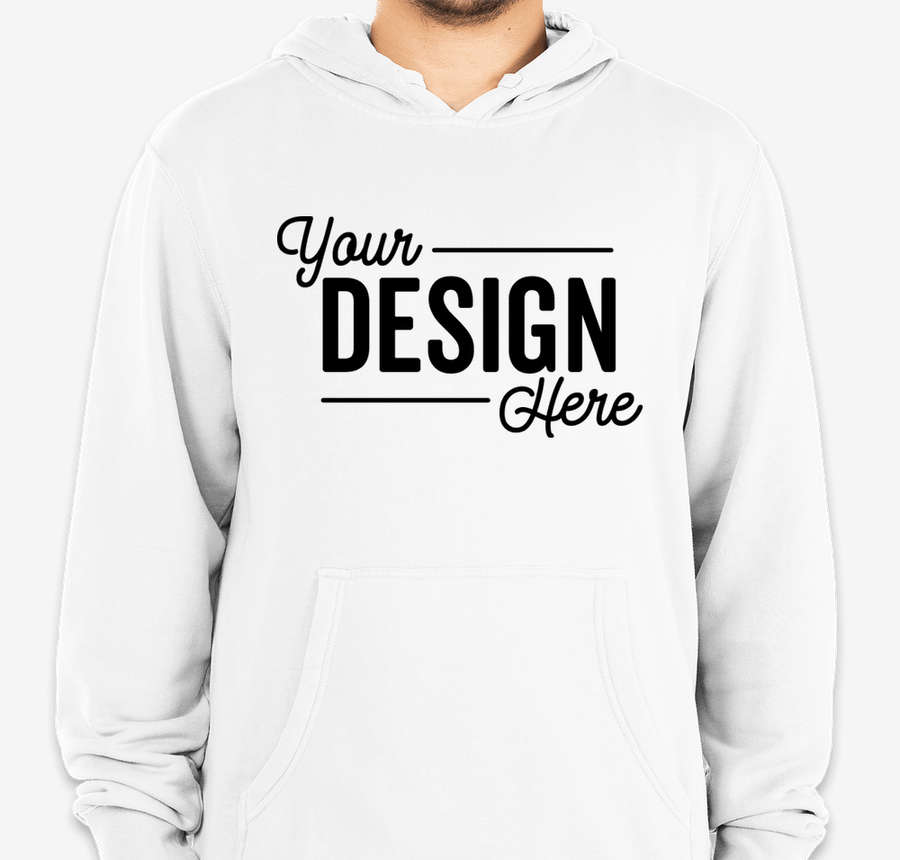
Independent Trading Co. Pigment Dyed Hoodie — Alternative Pick
- 9 oz 80/20 cotton/poly face; explicitly labeled “pigment dyed” — no reactive dye colorways
- Good option when the full Comfort Colors color range isn’t needed
Design Inspiration
Printing & Embroidery on Pigment-Dyed Fabric
Pigment-dyed garments are compatible with screen printing and embroidery — but each method has a few specifics worth knowing before you design. Our design experts review every order, so if you’re not sure which method fits your design, they can advise before anything goes to production.
Screen Printing
Plastisol inks are the standard recommendation for pigment-dyed fabric. They provide strong opacity and solid adhesion to the surface-level pigment without the chemical interaction that other ink systems can trigger.
- Dye migration is the main concern: Certain dark pigment colors (Brick, Crimson, Willow) can tint light or white inks during the curing process. Low-bleed plastisol formulas address this, but it’s worth noting for designs with white or light-colored elements on dark garments.
- Skip water-based inks: Pigment dye won’t discharge the way reactive dye does, so light water-based ink on dark pigment-dyed fabric won’t achieve the intended look.
- Discharge printing is not recommended: Discharge works by chemically removing the base dye — and since pigment dye is surface-bonded rather than fiber-bonded, it doesn’t respond the way reactive-dyed garments do.
- Order a few extra blanks: Test prints let you confirm ink performance before the full run. Cleaning ink spots from pigment-dyed fabric can pull color, so printing directly on the final garments with full production confidence is worth the extra step.
Embroidery
Embroidery works well on pigment-dyed garments. The 6.1 oz ring-spun cotton construction of most Comfort Colors tees provides a stable base for thread, and the soft, muted fabric color creates a natural contrast that makes embroidered logos and text pop. The textured surface of pigment-dyed fabric also adds dimension to the embroidery that flat-dyed shirts don’t replicate. Chest and left-pocket logo placements are both popular choices.
Digital Printing (DTG)
Digital printing on pigment-dyed fabric is possible but requires more preparation. Pre-treatment is required for colored garments, and dye migration can affect ink results on certain colors. If your design involves photography or full-color artwork and you’re set on pigment-dyed fabric, ask our team to confirm compatibility for your specific colorway before finalizing the order.
Customer Story
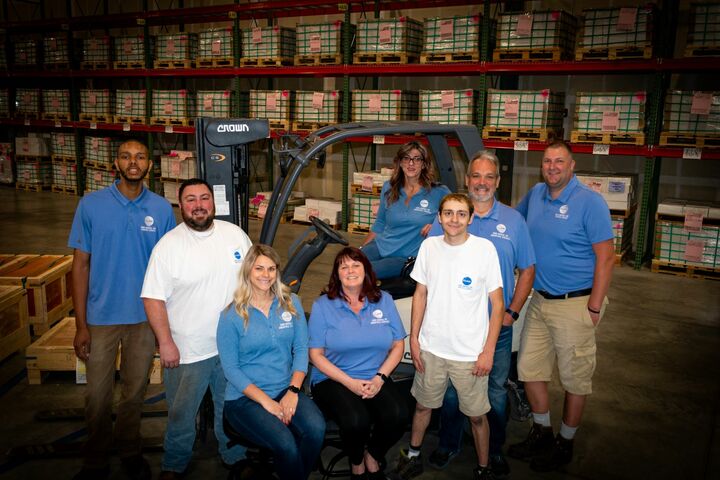
“We took this photo when we were being featured in the company magazine to recognize our division’s growth and transition into a larger warehouse.”
— Michaela Gardner, CUMI America
Featured Products from This Story

Comfort Colors 100% Cotton Pocket T-Shirt
- 6.1 oz ring-spun cotton; garment-dyed; double-needle throughout
- Left-chest pocket; shoulder-to-shoulder twill tape for structure
Comfort Colors Long Sleeve Pocket T-Shirt
- Long-sleeve version of the pocket tee; same garment-dye construction
- Popular for team uniforms and staff shirts in cooler months
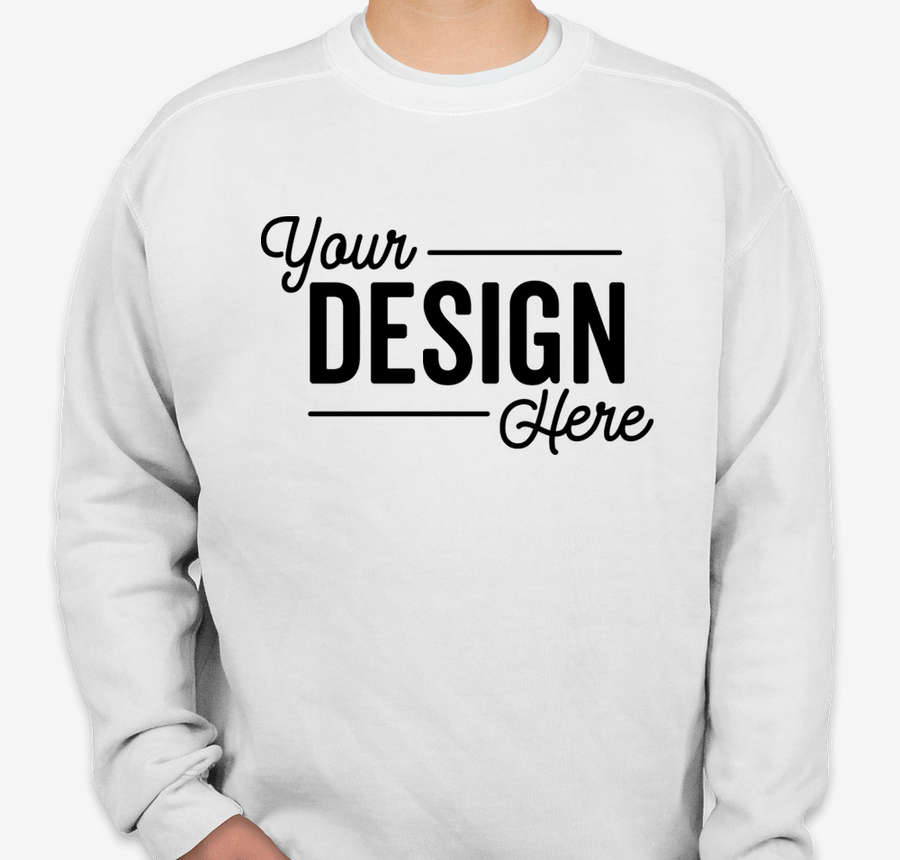
Comfort Colors Crewneck Sweatshirt
- 9.5 oz 80/20 ring-spun cotton/poly; garment-dyed crewneck
- Screen printing and embroidery both perform well on the heavyweight fleece construction
Design Inspiration
How to Care for Pigment-Dyed T-Shirts
Pigment-dyed garments from Comfort Colors are pre-shrunk through two commercial wash-and-dry cycles before they leave the factory, so size change after your order is minimal. Color, however, will continue to evolve — that’s by design. Here’s how to manage the process.
- Wash with like colors: Surface pigment can transfer to lighter garments, especially in the first few washes. Keeping dark pigment-dyed shirts with other darks protects lighter items in the load.
- Cold water, gentle cycle: Hot water accelerates pigment release from the binder. Cold water and a gentle cycle preserve color longer while still cleaning effectively.
- No bleach: Bleach breaks down the polymer binder that holds pigment to the fiber. The shirt will mottle and fade unevenly — not in the intentional way.
- Expect some initial color transfer: The first two or three washes typically release a small amount of excess surface pigment. This is normal and stops on its own.
- Tumble dry low or hang dry: High heat in the dryer degrades the binder faster than necessary. Low heat or air drying preserves the garment and slows further fading.
- Fading over time is a feature: The color will soften with each wash cycle. Most wearers consider this part of the garment’s appeal — each shirt develops its own character with wear.
For groups ordering pigment-dyed shirts as staff uniforms or event merch, passing along these care notes with the order helps everyone get the longest wear out of the garments. We include care instructions with every order, and our delivery options page covers everything from standard timelines to rush shipping if you’re working against a deadline.
Ready to start? Browse our full selection of pigment-dyed t-shirts, or open our Design Lab to start customizing. If you’re working on a larger order or need guidance on which products and printing methods fit your project, our design experts are available to help at no extra cost. You can also check out our guides to soft custom t-shirts and screen printing for more detail on the topics covered here.
Frequently Asked Questions
Q: What makes pigment-dyed t-shirts look sun-faded?
The dyeing process applies insoluble pigment particles to the fabric surface using a binder, rather than chemically bonding dye deep into the fiber the way reactive dyeing does. Because the color sits on the surface rather than penetrating the fiber, it produces a naturally muted, lower-saturation appearance. Combined with the organic color variation that comes from garment dyeing after construction, the result is the worn-in, sun-faded look that makes these shirts distinctive. It’s a deliberate outcome of the process — not a quality issue.
Q: Is pigment dyed the same as garment dyed?
Not exactly — they refer to different things. Garment dyeing describes the timing of the dyeing process: the finished, assembled garment is dyed after construction rather than the fabric being dyed as a flat bolt before cutting. Pigment dyeing refers to the type of dye chemistry used — pigment particles bonded to the surface versus dyes that chemically bond into the fiber. Comfort Colors uses both: their garments are pigment-dyed (the chemistry) via the garment-dyeing method (the timing). So when you see “garment dyed” on a Comfort Colors label, pigment dye is typically what’s being used — but the two terms aren’t interchangeable across the industry.
Q: Will my pigment-dyed t-shirt fade more after washing?
Yes — and that’s by design. The polymer binder that holds pigment to the fiber surface gradually softens with each wash, allowing the color to evolve over time. Comfort Colors garments are commercially washed and dried twice before shipping, so most shrinkage is already removed, but color will continue to develop. Washing in cold water on a gentle cycle and drying on low heat slows the process. Most customers consider the ongoing softening and color evolution a feature of the garment rather than a drawback.
Q: Can I get matching colors across a large pigment-dyed t-shirt order?
Slight shade variation across individual garments is inherent to pigment dyeing — Comfort Colors explicitly notes this, and it’s considered a characteristic of the product rather than a defect. Within a single production run, variation is typically subtle. Across multiple orders placed weeks or months apart, batch-to-batch variation can be more noticeable. If your project requires strict color consistency across all pieces (for corporate uniforms or brand-matched apparel, for example), reactive-dyed garments in a standard piece-dyed fabric will give you more reliable color uniformity.
Q: What printing method works best on pigment-dyed t-shirts?
Screen printing with plastisol inks is the standard recommendation. Plastisol provides strong adhesion and opacity on pigment-dyed fabric. Water-based inks and discharge printing are not recommended — pigment dye is surface-bonded rather than fiber-bonded, so discharge chemistry doesn’t produce the intended results. Embroidery also works well; the ring-spun cotton construction of most Comfort Colors garments provides a stable, printable surface. For designs with light or white ink on dark pigment colorways, ask about low-bleed plastisol formulas to minimize dye migration during curing.
Q: Are pigment-dyed t-shirts more expensive than standard t-shirts?
Yes — typically 2–3× the blank cost of standard piece-dyed cotton like the Gildan Ultra Cotton. The premium reflects several factors: ring-spun cotton (finer and softer than open-end cotton), the labor-intensive garment-dyeing process applied after full construction, double commercial washing and drying for pre-shrinking, and heavier fabric weight (typically 6.1 oz vs. 5.3 oz for standard tees). At retail and in merch contexts, that price difference usually translates into higher perceived value — and higher willingness to pay from recipients and customers.
Q: How far in advance should I order pigment-dyed t-shirts?
Orders arrive at your door within 2 weeks with our free standard shipping. If your event or deadline is sooner, rush options are available for an additional charge. For larger orders or orders with complex designs, giving yourself 3–4 weeks is a comfortable buffer that leaves room for any artwork revisions before production begins.
Q: Can I order just one pigment-dyed t-shirt?
Some of our products have no minimums — check the product detail page for specific minimums on each style. The Comfort Colors 1717 and related styles typically have low minimums, and our group order feature makes it easy to collect sizes and payments from multiple people in your group without coordinating everything yourself.

Lissa has been helping customers create their perfect custom swag at Custom Ink since 2014 and loves to share her insights, tips, and tricks.