How to Create a Company Uniform Program & Policy (Templates & Tax Rules)
 Posted By Sofia Fox —
Sofia loves compiling data on custom swag our customers love and working with our internal experts to bring you the very best buying guides, advice, and industry stats.
SHARE:


A well-designed company uniform program does more than make your team look professional. It builds brand recognition, creates team cohesion, and can even simplify your morning routine for employees who no longer have to decide what to wear. If you’re considering implementing a uniform policy for your business, you’re in good company. According to the 2026 Custom Ink Swag Trends Survey, 40.79% of companies purchase custom products specifically for employee uniforms.
Whether you’re running a service business with technicians in the field, a restaurant with front-of-house staff, or a corporate office that wants a more cohesive look, we’ve helped thousands of businesses outfit their teams with custom uniforms. This guide walks you through everything you need to know about creating a uniform program that works, from drafting your policy to understanding tax implications.
Please note: We’re not tax advisors, accountants, or legal professionals. The tax and policy information in this guide is provided for general educational purposes only and should not be considered professional advice. Always consult with a qualified tax professional or attorney for guidance specific to your business situation.
In This Article
- Why Implement a Uniform Program
- Key Elements of a Uniform Policy
- Uniform Policy Template
- Are Uniforms Tax Deductible
- How Many Uniforms Per Employee
- How to Design Your Uniform Program
- Frequently Asked Questions
Key Takeaways
- Clear policies prevent confusion: A written uniform policy that covers dress code requirements, maintenance responsibilities, and enforcement ensures everyone knows expectations from day one.
- Tax deductions require specific criteria: Business uniforms can be tax-deductible for employers when they’re required for work and not suitable for everyday wear, with logo-branded apparel often qualifying.
- Plan for 5-7 uniform pieces per employee: Most businesses find this quantity allows for daily wear with time for laundering, though field workers and service technicians may need more.
Why Implement a Uniform Program
Uniforms go beyond matching shirts. They serve as a visual representation of your company culture and can significantly impact how customers perceive your business. When your field service technicians show up in professional, branded attire, customers immediately feel more confident about who’s entering their home or business. According to the 2026 Custom Ink Swag Trends Survey, 74% of swag organizers cite “team unity and belonging” as the primary outcome they want custom gear to achieve, and uniforms deliver exactly that.
From a practical standpoint, uniforms eliminate the guesswork around what constitutes “appropriate” workplace attire. Instead of managing gray-area dress code questions or dealing with inconsistent employee appearance, everyone simply wears the designated uniform. This creates instant equality in the workplace, as employees aren’t competing over fashion choices or feeling self-conscious about their wardrobe budget.
Not sure whether uniforms are right for your business in the first place? Our breakdown of employee uniforms vs. business casual walks through the pros, cons, and decision framework for each approach.
Uniforms also serve as walking billboards for your brand. Every time an employee stops for coffee, picks up lunch, or runs a personal errand during breaks, your company logo is visible to potential customers. This kind of organic brand exposure builds recognition in your community over time.
Pro tip: Many service businesses report that customers respond more positively to technicians in professional uniforms. It’s an instant trust signal that says “this is a legitimate, established company.”
Key Elements of a Uniform Policy
A comprehensive uniform policy should address several core areas to prevent confusion and ensure consistent implementation across your organization. The goal is to be specific enough that employees know exactly what’s expected while maintaining some flexibility for practical considerations.
Dress code guidelines form the foundation of any uniform policy. This section specifies exactly what employees should wear, from the specific garments (polo shirts, work pants, safety vests) to acceptable colors and styles. Be explicit about what’s required versus what’s optional, and clearly state what’s prohibited. For example, if your company provides branded polo shirts but employees can wear their own khakis, spell that out.
Fabric technology matters too: according to the 2026 Custom Ink Swag Trends Survey, 65% of companies rate “smart fabric” technology like moisture-wicking, wrinkle-free, and spandex blends as “very” or “extremely” important for employee uniforms.
Maintenance and care instructions clarify who is responsible for keeping uniforms clean and in good condition. Most companies expect employees to launder their own uniforms at home, but some industries with heavy soiling may provide cleaning services or stipends. Include guidance on proper washing techniques to extend garment life, especially for items with embroidery or specialized fabrics.
Issuing and replacement procedures outline how employees receive their initial uniforms and how they request replacements when items become worn, damaged, or no longer fit. Specify timelines: new hires receive uniforms during onboarding, replacement requests should be submitted to their supervisor, and worn-out items due to normal wear will be replaced at company expense.
Compliance and enforcement details the consequences for not following the uniform policy. A progressive approach works well for most businesses: first violation gets an informal reminder, second violation gets documented in the employee file, and ongoing violations may result in being sent home to change or other disciplinary action.
Accommodations address religious, medical, or cultural considerations. Your policy should include a process for employees to request modifications to the standard uniform requirements and should commit to evaluating each request on a case-by-case basis.
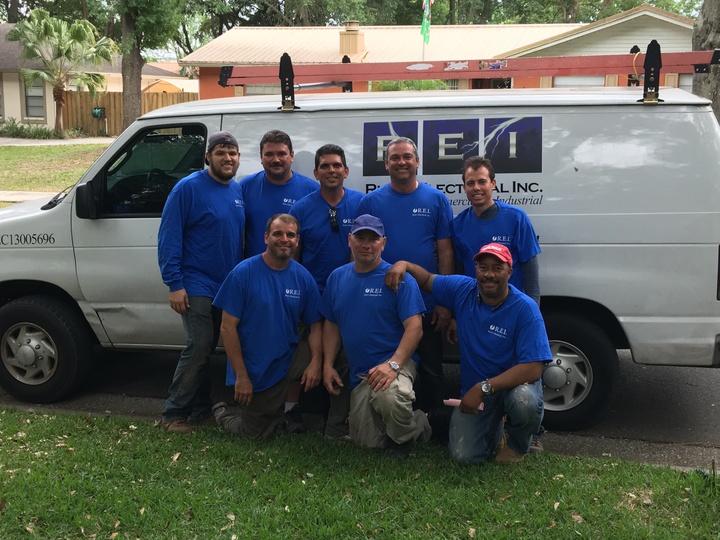
“This is the Rick’s Electrical Team at the office, at the end of day on Friday, when they all get together to talk about the previous week, as well as enjoy each others company. We have been ordering our company uniforms from Custom Ink for years now, and absolutely love the products quality as well as the customer service. We appreciate all the hard work you guys have done on making the shirts that way we can keep our company advertised to the general public in need!”
Featured Products from This Story

Gildan 100% Cotton Long Sleeve T-Shirt
- 100% cotton for all-day comfort
- Long sleeves ideal for field work
- Durable construction for demanding jobs
 |  |  |
Uniform Policy Template
Use this template as a starting point for creating your company’s uniform policy. Customize each section to fit your specific industry, company culture, and operational needs.
Purpose and Scope
This policy establishes guidelines for the proper wearing and maintenance of uniforms by employees of [Company Name]. The purpose is to ensure a consistent and professional appearance that reflects our brand and standards. This policy applies to all employees who are required to wear a uniform as part of their job responsibilities, including [list applicable roles: field technicians, customer service representatives, warehouse staff, etc.].
Uniform Requirements
Employees in uniformed roles must wear company-issued shirts, jackets, or other branded items specific to their department. All uniforms must be clean, in good condition, and worn appropriately during all work hours, including during arrival and departure when employees are visible to customers or the public. Uniforms should be kept neat, free of tears or excessive wear, and maintained according to care instructions provided.
Uniform Distribution
New employees will receive their initial set of [number] uniforms during onboarding at no cost. The company will replace uniforms that become damaged, worn out, or unsuitable for use due to normal wear and tear at no cost to the employee. Employees must report any need for replacement to their supervisor or HR department. Additional uniforms beyond the initial issuance may be purchased by employees at [company expense/employee expense/subsidized cost].
Care and Maintenance
Employees are responsible for the proper care of their uniforms, including regular washing, ironing if applicable, and appropriate storage. Uniforms should be washed according to label instructions to preserve decoration and fabric quality. Any alterations to uniforms must be approved by [HR/management]. Lost or damaged uniforms due to negligence may result in the employee covering replacement costs.
Compliance
Employees who do not follow the uniform policy will be addressed as follows: first violation receives an informal reminder or coaching from their supervisor; second violation receives a formal written warning and documentation; ongoing or serious violations may result in being sent home to change or further disciplinary action up to and including termination. The goal is always to resolve issues respectfully and collaboratively.
Accommodations
Exceptions to this policy may be granted for medical, religious, or cultural reasons. Employees who require accommodations should submit a request to HR for review and approval. All requests will be evaluated on a case-by-case basis. Upon termination of employment, employees must return all issued uniforms to [Company Name] clean and in good condition.
Best for: Service businesses, restaurants, retail stores, healthcare facilities, and any customer-facing organization looking to establish professional appearance standards.
Are Uniforms Tax Deductible?
Understanding the tax implications of employee uniforms can help your business make smarter purchasing decisions. In many cases, the cost of providing uniforms to employees can be a legitimate business expense deduction. However, specific IRS criteria must be met.
One thing to keep in mind when budgeting: the 2026 Custom Ink Swag Organizer Survey found that 35% of companies ordering employee uniforms cite “quality looking cheap” as their top fear, so investing in durable, professional-looking workwear pays dividends beyond just tax benefits.
For a business to deduct the cost of employee uniforms, two conditions must be satisfied. First, the uniform must be required as a condition of employment. Second, the uniform must not be suitable for everyday wear outside of work. Both conditions must be met for the expense to qualify as deductible.
What typically qualifies as deductible:
- Protective clothing such as hard hats, steel-toe boots, and safety vests
- Distinctive uniforms required for specific jobs, such as medical scrubs, chef coats, or delivery driver uniforms
- Clothing prominently branded with your company logo that wouldn’t reasonably be worn as everyday attire
- Cleaning and maintenance costs for uniforms that qualify as deductible
What typically does not qualify:
- Standard business attire like suits, dress shirts, or slacks, even if required by dress code
- Clothing that could reasonably be worn outside of work as part of a normal wardrobe
- Color-coordinated clothing requirements without distinctive branding (for example, “wear a blue polo and khakis”)
This is worth noting for businesses: clothing with your company logo prominently displayed may be reclassified as marketing or advertising expenses rather than traditional uniforms. When your team wears shirts, jackets, or hats with your business name or logo, those items serve a promotional function. This can potentially allow a broader range of clothing items to qualify as deductible business expenses.
Important note for employees: The Tax Cuts and Jobs Act of 2017 originally suspended most unreimbursed employee expense deductions for W-2 employees from 2018 through 2025. The One Big Beautiful Bill Act, signed into law in 2025, made this suspension permanent. This means individual employees cannot deduct uniform costs on their personal federal tax returns, even if the employer requires them. However, some states including California, New York, and Pennsylvania still allow these deductions on state tax returns.
Budget tip: Since logo-branded uniforms may offer both deductibility and marketing benefits, investing in quality embroidered or screen-printed workwear with your company name can serve double duty. We’re not tax professionals, so always consult with a qualified accountant or tax advisor for guidance specific to your business situation.
How Many Uniforms Per Employee?
One of the most common questions we hear from businesses setting up uniform programs is how many pieces each employee should receive. The answer depends on several factors: how often employees work, the type of work environment, and your budget constraints.
For most businesses, we recommend providing 5-7 uniform tops per full-time employee. This allows employees to wear a fresh uniform each day of the work week with extras available during laundry cycles. If your team works in a particularly dirty or strenuous environment, you may need to increase this number to allow for mid-day changes.
General guidelines by role type:
- Office and retail staff: 5 shirts or polos is typically sufficient
- Field service technicians: 7-10 shirts to account for heavy soiling and outdoor conditions
- Restaurant and hospitality: 5-7 shirts with consideration for aprons as a separate item
- Healthcare workers: 7-10 scrub tops/bottoms for daily changes and proper sanitation
- Part-time employees: 3-5 pieces based on scheduled shifts per week
Don’t forget to consider seasonal variations. If your team needs both short-sleeve and long-sleeve options, or if you provide jackets for cold weather, factor those into your uniform budget. Many companies order a mix: 3-4 short-sleeve shirts, 2-3 long-sleeve shirts, and 1 jacket or hoodie per employee.
Pro tip: Build in a small buffer of extra uniforms in common sizes. This allows you to immediately outfit new hires without waiting for a new order and provides quick replacements for damaged items.
How to Design Your Uniform Program
Getting your uniform program up and running doesn’t have to be complicated. We’ve helped thousands of businesses through this process, and this is what we’ve found works best.
Step 1: Define your goals and requirements
Start by identifying what you want your uniforms to accomplish. Is brand visibility the priority? Employee safety? Professional appearance for customer-facing roles? Your answers will guide decisions about garment types, colors, and decoration methods. Also consider any industry-specific requirements, such as safety certifications for high-visibility gear or food service guidelines for restaurant uniforms.
Step 2: Choose your garment styles
Match your uniform selections to the work environment and employee needs. For office settings, custom polos and button-down shirts work well. Field service and trades benefit from durable work shirts and performance fabrics. We recommend considering comfort, durability, and seasonal needs when selecting styles. Involving employees in the decision-making process can boost buy-in and ensure you choose garments people will actually want to wear. It’s worth noting that the 2026 Custom Ink Swag Trends Survey found that 91% of respondents agree their team feels more valued when receiving a recognized retail brand compared to generic items, so consider quality workwear brands like Carhartt, Dickies, or CornerStone.
Step 3: Design your branded look
Decide how your logo and company name will appear on the uniforms. Embroidery gives a polished, professional look that’s especially popular for embroidered workwear like polos and jackets. Screen printing works great for t-shirts and when you want larger, more colorful designs. Our Design Lab lets you visualize different placement options, and our team of Inkers can help refine your artwork at no extra cost.
When choosing colors, keep in mind that 32% of companies prefer professional neutrals (black, white, gray, navy) for their uniforms, while 24% opt for “utility” work jacket looks, according to the 2026 Swag Trends Survey.
See our guide here for more on how to design great uniforms.
Step 4: Collect sizes and place your order
Survey your team to gather size information. Our Group Orders feature lets employees enter their own sizes and shipping addresses, simplifying the process for managers. For ongoing uniform needs, you can save your design and reorder as needed when new employees join or existing uniforms need replacement.
Step 5: Distribute and communicate
When uniforms arrive, distribute them along with your written uniform policy. Make sure everyone understands the expectations for wear, care, and maintenance. Consider adding uniform information to your employee handbook and including it in new hire orientation materials.
Don’t miss: If you have team members working remotely or in multiple locations, we offer split shipping to send individual orders directly to each employee’s home address.

“We’re so happy to start wearing our new t-shirts for the first time. We’re going to look a lot more professional. Thanks CustomInk.”
Featured Products from This Story
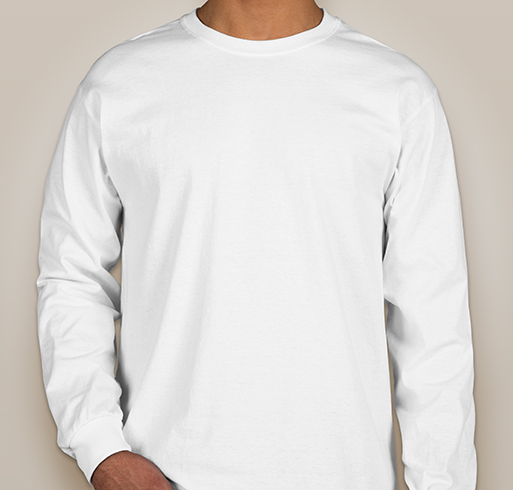
Gildan Ultra Cotton Long Sleeve T-Shirt
- 6.0 oz 100% preshrunk cotton
- Long sleeves for sun protection
- Ribbed cuffs maintain shape
A well-implemented uniform program strengthens your brand, unifies your team, and creates a professional impression with every customer interaction. Whether you’re outfitting a small crew or a large workforce, we’re here to help you find the right custom uniforms for your business.
Frequently Asked Questions
Q: How far in advance should I order custom uniforms for my team?
Orders typically arrive within 2 weeks with free standard shipping. If you’re outfitting a new team or need uniforms for a specific launch date, we recommend ordering at least 3 weeks ahead to allow time for size exchanges. Rush delivery options are available at checkout for tighter timelines. Learn more about delivery options.
Q: Can I order custom uniforms with no minimum quantity?
Many of our workwear and uniform products have low or no minimums, making it easy to outfit small teams or order replacement pieces for individual employees. Check the product details or filter by “no minimum” when browsing our custom uniforms selection.
Q: Are employee uniforms a tax-deductible business expense?
The IRS allows businesses to deduct uniform costs when two conditions are met: the uniform is required for employment, and it’s not suitable for everyday wear. Logo-branded workwear often meets these criteria. However, standard business attire like suits or plain polo shirts typically don’t qualify. We recommend consulting with a tax professional for guidance specific to your situation.
Q: Should I choose embroidery or screen printing for work uniforms?
Embroidery creates a polished, professional look that holds up well to repeated washing, making it ideal for polos, jackets, and dress shirts. Screen printing works best for t-shirts and designs with multiple colors or larger graphics. Our team can help recommend the best decoration method for your specific uniform needs.
Q: Can team members order their own sizes and have uniforms shipped to different addresses?
Yes. Our Group Orders feature allows each team member to select their size and enter their shipping address. This is especially helpful for remote teams or companies with employees in multiple locations.
Q: How many uniforms should I provide for each employee?
For full-time employees, we recommend 5-7 uniform tops to allow for daily wear with time for laundering. Field service workers and employees in physically demanding or messy environments may need 7-10 pieces. Part-time employees typically need 3-5 pieces based on their scheduled shifts.
Q: Can I get help designing my company uniform logo?
Absolutely. Every order includes free design support from our team of Inkers. You can upload your logo to our Design Lab, choose from thousands of templates, or work with our artists to create a professional design. We’ll clean up artwork, suggest placement options, and ensure your logo looks sharp before printing.
Q: What workwear brands do you carry for custom uniforms?
We carry popular workwear brands including Carhartt, Dickies, CornerStone, DriDuck, and more. These industrial-grade options are designed for durability and comfort in demanding work environments, from construction sites to service calls to warehouse operations.
Q: Can I mix different uniform styles in one order?
Yes, as long as your design remains the same, you can mix and match styles, colors, and sizes within a single order. This allows you to provide polos for office staff, work shirts for field crews, and jackets for everyone, all with consistent branding.
Q: How do I handle uniform sizing for new hires?
Many companies keep a small inventory of extra uniforms in common sizes to immediately outfit new employees. You can also save your design in our system and place quick reorders when needed. Our size charts and garment measurements help employees choose the right fit from the start.
Q: Is it better to rent or buy work uniforms?
There are pros and cons to both. For a full discussion on the topic, review our guide to buying or renting uniforms here.

Sofia loves compiling data on custom swag our customers love and working with our internal experts to bring you the very best buying guides, advice, and industry stats.