The Employee Onboarding Checklist Every Manager Needs (2026 edition)
 Posted By Custom Ink Staff —
The Custom Ink Staff is a team of design enthusiasts and promo product experts dedicated to bringing your ideas to life. From screen printing secrets to the latest trends in custom gear, we draw on decades of collective experience to help you create something unforgettable.
SHARE:


Only 12% of employees strongly agree their company does a great job onboarding new hires, according to Gallup. That number goes a long way toward explaining why 70% of new hires decide whether a job is right for them within the first month, and 29% make that call within their first week (BambooHR, 2023).
Strong onboarding is entirely improvable with a consistent, repeatable process. Below you’ll find a phase-by-phase checklist for managers, along with data-backed guidance on building a new hire welcome kit that makes an impression on day one.
In This Article
- Before Day 1: The Pre-Start Checklist
- Day 1: What a Great First Day Actually Looks Like
- Week One and Beyond: The Manager’s Ongoing Checklist
- The 30-60-90 Day Onboarding Plan
- The Welcome Kit: What the Data Says
- Frequently Asked Questions
Key Takeaways
- The decision window is tighter than most managers realize: 70% of new hires decide if a job is right for them within their first month, and 29% make that call within the first week. Everything happening in those early days carries weight.
- Managers are the most important variable: Gallup found that new hires with active, involved managers are 3.4x more likely to say their onboarding was successful. A checklist helps, but your presence matters more.
- Welcome kit timing is as important as what’s inside it: Employees who received a kit on Day 1 were nearly twice as likely to say they completely belonged from the start compared to those who received no kit at all, per our 2026 Employee Onboarding Experience Audit.
Before Day 1: The Pre-Start Checklist
Onboarding starts before the new hire walks in the door. The week before someone joins is when most logistical failures happen: missing credentials, equipment delays, no one knowing the new person is coming. Getting this phase right sets the tone for everything that follows.
For a deeper look at the full onboarding process — from pre-boarding through the 90-day milestone and what the research says about belonging — see our overview of what employee onboarding is and why it matters.
| Task | Details |
|---|---|
| Send offer letter and complete digital paperwork | Benefits enrollment, W-4, direct deposit, emergency contact. Complete all paperwork before Day 1 so the first day isn’t spent on HR admin. |
| Share first-day logistics in writing | Start time, where to park, what to wear, who to ask for at reception. New hires lose sleep over these details, so remove the guesswork. |
| Set up accounts and equipment | Email, Slack, project management tools, badge access. Test logins before the new hire arrives. A laptop that isn’t ready sends an immediate message. |
| Announce the hire internally | Send a team Slack message or email introducing the new hire by name, role, and start date. Include something personal if they’ve shared it: a fun fact, where they’re coming from. |
| Order the welcome kit | Branded apparel, a quality drinkware item, and something practical. Order early enough that it arrives before or on Day 1. Late delivery performs almost identically to no kit at all. |
| Assign an onboarding buddy | A peer (not a manager) who can field informal questions. This reduces the pressure on both the new hire and the manager in the first two weeks. |
| Block the Day 1 calendar | Schedule a welcome meeting, team lunch, and key introductions before the new hire starts. Don’t leave them with an empty calendar and no idea what to do. |
Day 1: What a Great First Day Actually Looks Like
Day 1 is the one impression you can’t re-make. SHRM research shows that employees who experience structured onboarding are 58% more likely to stay three or more years. The first day is the foundation of that structure.
| Task | Details |
|---|---|
| Meet the new hire at arrival | Don’t make them stand in reception alone – if they’re remote, don’t let them open their calendar to an empty slate. The manager or the onboarding buddy should be there when they walk in, or on the phone/video call right from the get-go. |
| Give a workspace and office tour | Restrooms, kitchen, printer, emergency exits, the spots where people actually hang out. If you’re in person, cover the basics so they don’t have to ask. |
| Present the welcome kit | Hand it over personally when possible, not left at a desk. Even a quick “welcome aboard, this is for you” as you hand it over makes a stronger impression than finding it waiting on a chair. |
| Walk through role expectations | What does success look like at 30 days? 60 days? 90 days? Write it down and share it so both sides have the same picture. |
| Introduce to key team members | Go beyond the immediate team. If they’ll interact with finance, marketing, or IT regularly, a quick intro on Day 1 starts building those connections early. |
| Run a brief tools walkthrough | Don’t dump 12 logins into an email. Walk through the essential tools together and point to where the documentation lives. |
| Team lunch or coffee, scheduled (not optional) | Having a social anchor on Day 1 removes one of the most common sources of new-hire anxiety: what to do at lunch. |
Week One and Beyond: The Manager’s Ongoing Checklist
The manager’s job in week one is primarily to remove obstacles and show up consistently. Gallup’s research found that new employees with an active manager involvement in onboarding are 3.4x more likely to say onboarding was successful. New hires take up to 12 months to reach peak productivity. Regular check-ins are how you close that gap faster.
For distributed teams, these check-ins carry additional weight. See our guide to remote and hybrid onboarding for a checklist tailored specifically to employees who never set foot in your office.
| Task | Details |
|---|---|
| Daily 10-minute check-in (first two weeks) | Not a performance review. Ask “what questions came up today” conversation. Small blockers compound quickly if they go unaddressed. |
| Walk through company culture and values with examples | Beyond the slide deck. Share a story about a time the team lived those values, or a time they learned from not living them. |
| Facilitate cross-functional introductions | HR, IT, finance, operations, whoever the new hire will touch over the next six months. Don’t wait for these to happen organically. |
| Share key documentation and internal resources | The internal wiki, org charts, process guides, brand guidelines. Confirm the new hire can find everything before the end of week one. |
| Put 30/60/90 day goals in writing | Written goals, shared with the new hire, create shared accountability. Verbal expectations are the most common source of early friction. |
The 30-60-90 Day Onboarding Plan
Formal onboarding programs lead to 50% greater new-hire retention and 62% greater productivity, according to Harvard Business Review. The 30-60-90 framework gives that structure shape, and it gives the new hire a visible roadmap for what’s expected as the months progress.
| Phase | Primary Focus | Key Actions |
|---|---|---|
| Days 1–30: Learn | Absorb and observe | Shadow experienced teammates; complete required training; understand the team’s priorities, workflows, and key relationships. Ask more questions than you answer. |
| Days 31–60: Contribute | Start adding value | Take on first solo tasks with clear scope; surface any blockers early; establish a regular cadence of 1:1s with the manager. Mistakes in this phase are expected and recoverable. That’s what this window is for. |
| Days 61–90: Grow | Take ownership | Lead one meaningful project or process improvement; set goals for the next quarter; share candid onboarding feedback with HR. The people who join after you will benefit from what you learned. |
The Welcome Kit: What the Data Says
Half of all employees say the quality of their overall onboarding experience directly affected how long they stayed at a job, according to our 2026 Employee Onboarding Experience Audit, a survey of more than 600 HR professionals and employees. Of those, 33% said a strong onboarding made them more committed to staying; 17% said a poor one made them leave sooner. The welcome kit is one of the most tangible parts of that first impression.
In our survey, employees who received a welcome kit on Day 1 were nearly twice as likely to say they completely belonged from the start (34% vs. 18% with no kit). The more counterintuitive finding: a late kit performed almost identically to no kit. Among employees whose kit arrived after their start date, 49% said it took time to feel included, nearly matching the 44% figure for employees who received nothing at all.
For remote and hybrid teams especially, the kit is often the only tangible onboarding moment a new hire receives. Getting it there before Day 1 matters as much as what’s inside it.
For a ranked breakdown of what employees actually want in that kit — with specs, budget guidance, and design tips for each item — see our guide to new hire welcome kit ideas.
What Employees Actually Want in a Kit
When we asked 303 employees what they’d put in a perfect welcome kit, the results were practical and consistent:
| Item | % Who’d Include It | What this tells you |
|---|---|---|
| High-quality water bottle or tumbler | 43% | The #1 item by a wide margin. Used daily, sits on the desk, carries the brand impression for years. Quality matters: “high-quality” was in the survey wording. |
| Tote bag or backpack | 36% | Functional items used outside the office extend brand visibility beyond the workplace. |
| Branded hoodie or sweatshirt | 34% | Employees want apparel they’d reach for on their own. A hoodie says you invested; a cheap tee says you checked a box. |
| Branded t-shirt | 32% | A solid anchor item. Pairs well with a hoodie for kits that offer options by season. |
| Personalized welcome note from leadership | 24% | The only non-physical item in the top half of the list. Costs nothing to add. A handwritten note from a manager or executive carries weight no branded item can replicate on its own. |
One more finding worth taking seriously: 64% of employees say cheap or low-quality branded gear creates a negative impression of the employer. A low-quality kit sends a message. Fewer items at better quality consistently outperforms more items at lower quality. If you’re building a kit on a limited budget, prioritize the tumbler and one well-made apparel item over a large box of forgettable swag.
We’ve helped hundreds of HR teams put together welcome kits that make an impression from day one. Our design experts can help you figure out what to brand, how to brand it, and how to get it to new hires on time. Our free standard shipping gets orders to your door in two weeks, with rush options available if you’re working against a start date.
One PHC team used Custom Ink for a team spirit project and was already planning their next order for new hires:
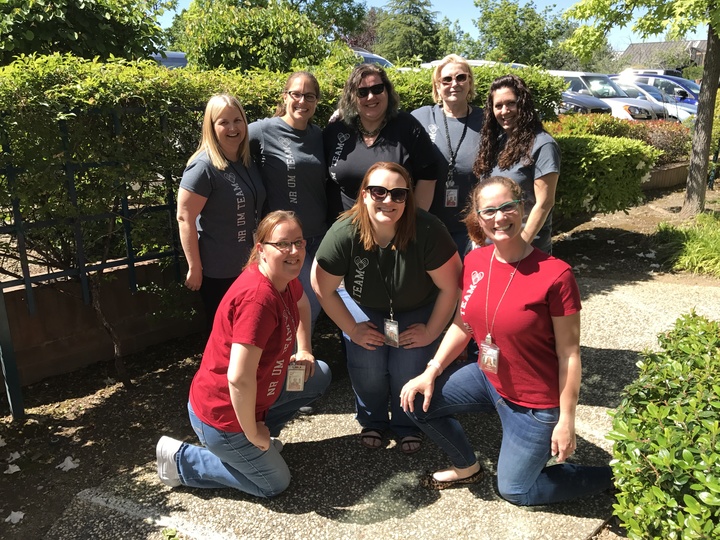
“We ordered UM Team Tee’s as part of a team building/spirit project. We are the Northern Region Utilization Management Team. While we are quite a bit of our work is done solo. So while we may not be the loudest or most out spoken team in the office; We are quite diligent, consistent and proud to be at PHC. Ordering was amazingly easy. Tim Z. and the entire team at CustomInk are super awesome to work with. Shirts are great quality with a Variety of options to choose from. We look forward to creating an additional order for our new hires and for those who passed on round 1!!!”
Featured Products from This Story
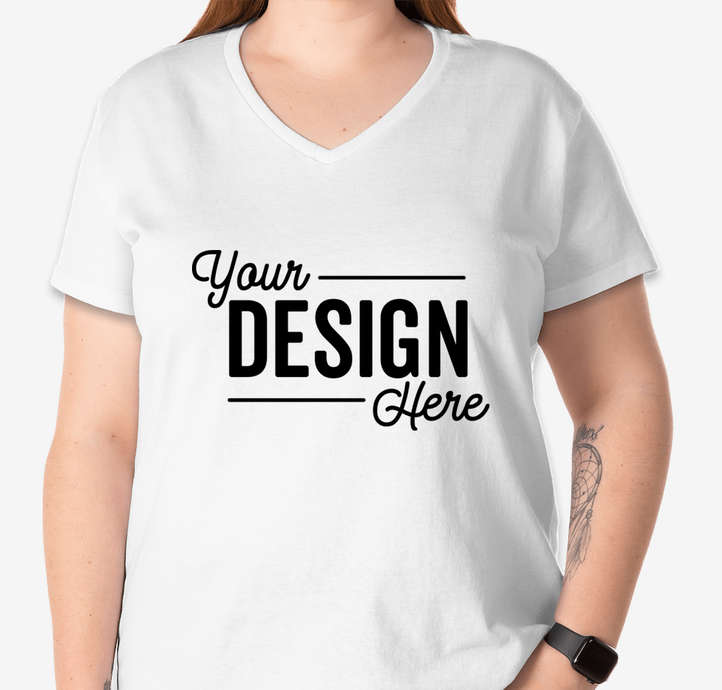
Gildan Women’s 100% Cotton V-Neck T-Shirt — Budget-Friendly Option
- 5.3 oz., 100% preshrunk cotton with a relaxed v-neck and tapered fit; available in S–3XL.
- Best for: Teams that want inclusive sizing and a feminine-fit option alongside the standard unisex tee.
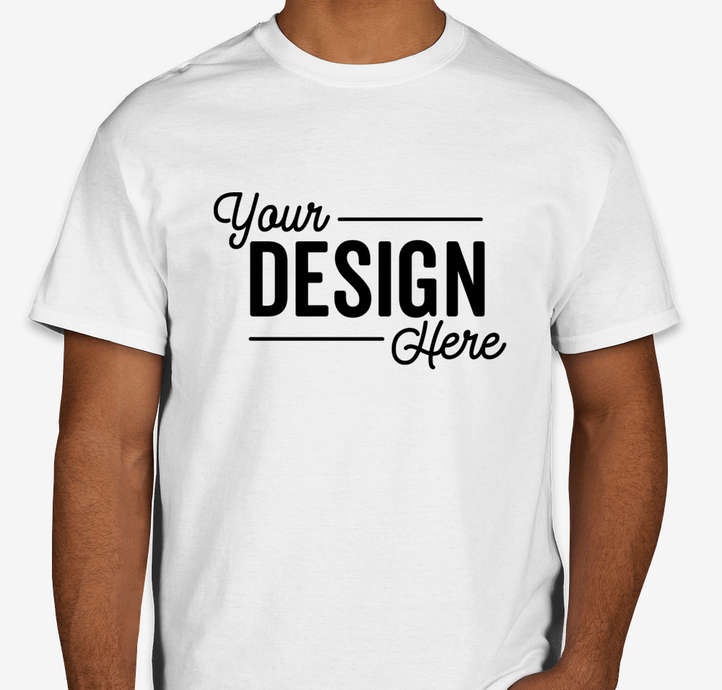
Gildan 100% Cotton T-Shirt — Classic Unisex
- 5.3 oz., 100% preshrunk US cotton (jersey knit); OEKO-TEX certified; available in S–5XL in ~70 colors.
- Best for: High-volume welcome kit orders where budget matters without sacrificing a clean, printable canvas.
Design Ideas for Your Welcome Kit Apparel
Start with your logo in our Design Lab or use one of these corporate-ready templates as a starting point. Each one is fully editable: swap in your brand colors, company name, or tagline.


If you’re sourcing gear for a remote team or need items shipped directly to new hires across the country, our group order feature handles individual sizing and separate shipping addresses, so you don’t have to chase down preferences from each new hire. Explore our full range of new hire welcome kits for more ideas on what to include.
Frequently Asked Questions
Q: How long should employee onboarding last?
Most structured onboarding programs run 90 days, though some extend to six months for complex roles. Gallup research found that new hires can take up to 12 months to reach full productivity. A strong 90-day program shortens that window significantly.
Q: Who is responsible for onboarding: HR or the manager?
Both. Gallup’s research is clear that the manager’s involvement is the most important variable in whether a new hire says onboarding was successful. HR handles the logistics and compliance; the manager handles the relationship, the expectations, and the day-to-day experience. Neither can fully substitute for the other.
Q: What should a new hire actually do on their first day?
Listen more than they talk, ask questions they’re genuinely curious about, and resist the urge to demonstrate competence too quickly. The first day is for absorbing context: who does what, what the team’s real priorities are, and what the culture actually feels like in practice.
Q: What should go in a new hire welcome kit?
Based on our 2026 Employee Onboarding Experience Audit, employees most want a high-quality water bottle or tumbler (43%), a tote bag or backpack (36%), branded apparel like a hoodie or t-shirt, and a personalized welcome note from leadership. Fewer, better-quality items consistently outperform a large box of forgettable swag. 64% of employees say cheap gear creates a negative impression.
Q: Can I order welcome kit items in different sizes for each new hire?
Yes. Our group order feature lets each person choose their own size and even their own shipping address, which is especially useful for remote or distributed teams. You can also place a standard order and ship to one location. Either way, our free standard shipping gets your order to you within two weeks, with rush options if you need it sooner.
Q: How far in advance should I order welcome kit items?
Order at least two to three weeks before a new hire’s start date to ensure on-time delivery with free standard shipping. Our research shows that late kits are nearly as damaging to first-day belonging as no kit, so building lead time into your process is worth it. If someone is starting sooner than that, rush options are available.

The Custom Ink Staff is a team of design enthusiasts and promo product experts dedicated to bringing your ideas to life. From screen printing secrets to the latest trends in custom gear, we draw on decades of collective experience to help you create something unforgettable.